North Georgia's severe season does not wait for you to be ready. Once the spring and summer storms start rolling across Bartow County, a small weakness in your roof becomes the exact spot that fails at two in the morning during a straight-line wind event. The good news is that most storm failures start as minor issues that are visible, and fixable, weeks before the weather turns. Spending an hour on a pre-storm check is some of the cheapest insurance a homeowner can buy. Here are the eight things to look at.
A safety note first: much of this can be done from the ground with binoculars or from inside your attic. Do not climb onto a roof yourself, especially a steep or wet one. Where we mention roof-surface details, that is a job for a professional.
1. Shingles: missing, curling, or cracked
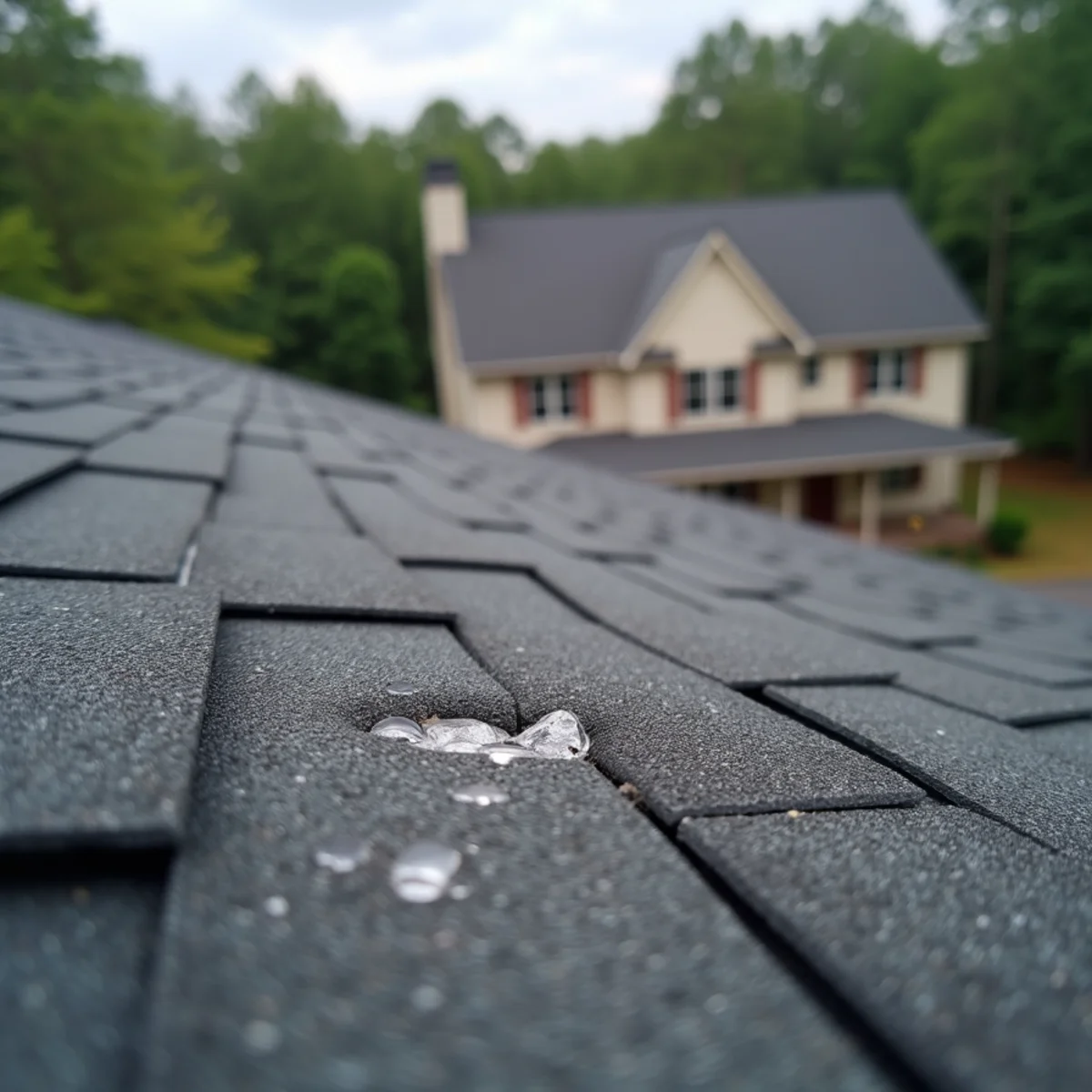
Walk your property and scan every slope with binoculars. You are looking for shingles that are missing entirely, lifted at the edges, curling or cupping, or visibly cracked. Also note any shingles that look darker or shinier than their neighbors, which can mean granule loss has exposed the asphalt. A few compromised shingles before a storm become the launching point for wind to peel back a whole section. Catching them now turns a five-minute roof repair into a non-event instead of a midnight emergency.
2. Flashing around chimneys, skylights, and valleys
Flashing is the metal that seals the joints where your roof meets a chimney, a skylight, a wall, or another roof plane in a valley. It is the single most common source of leaks, because those transitions are where water concentrates. From the ground or attic, look for flashing that is lifted, rusted, separating, or has failed sealant. These details take a beating in wind-driven rain, so they are the first thing a storm exploits. Our chimney flashing and skylight service addresses exactly these vulnerable points.
3. Gutters and downspouts
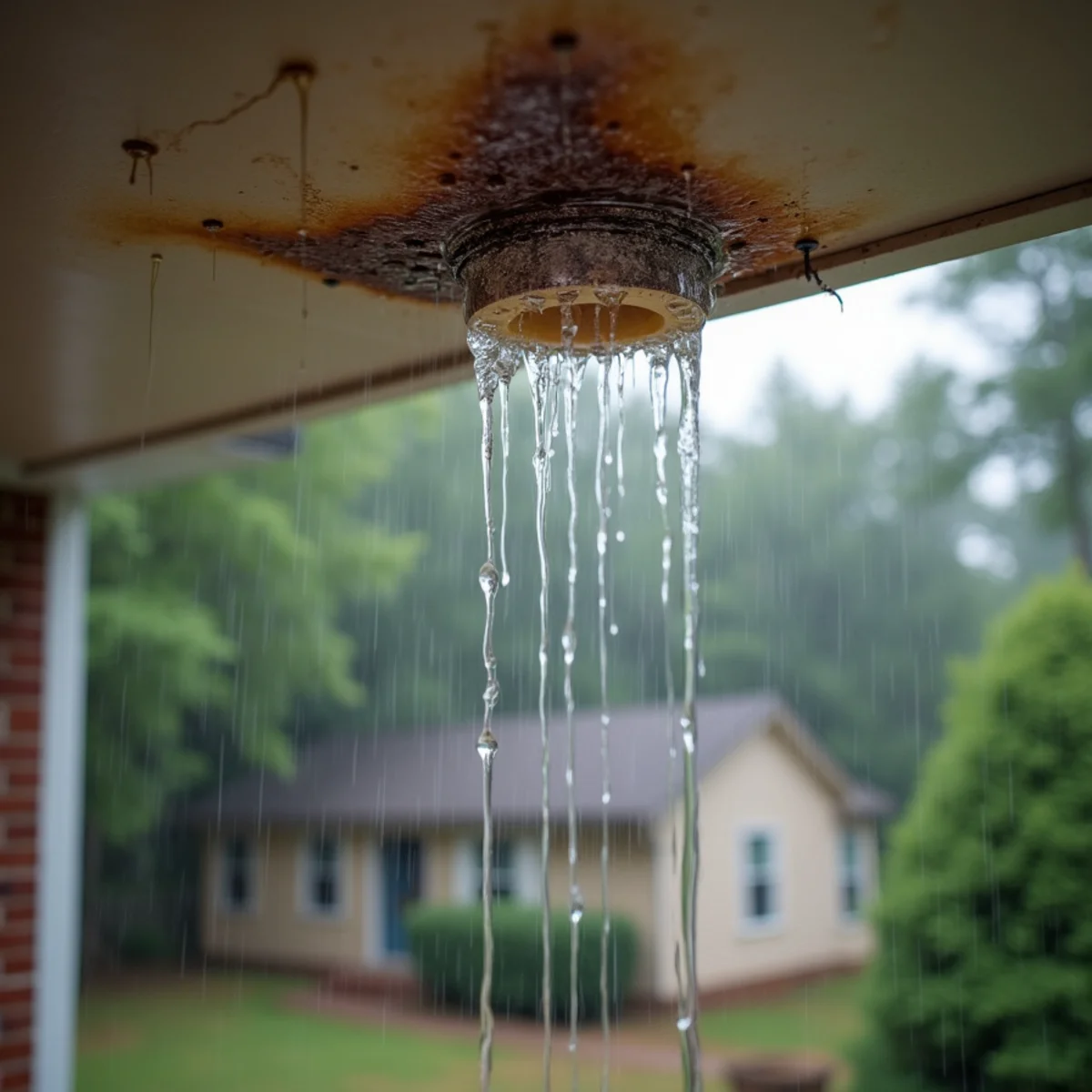
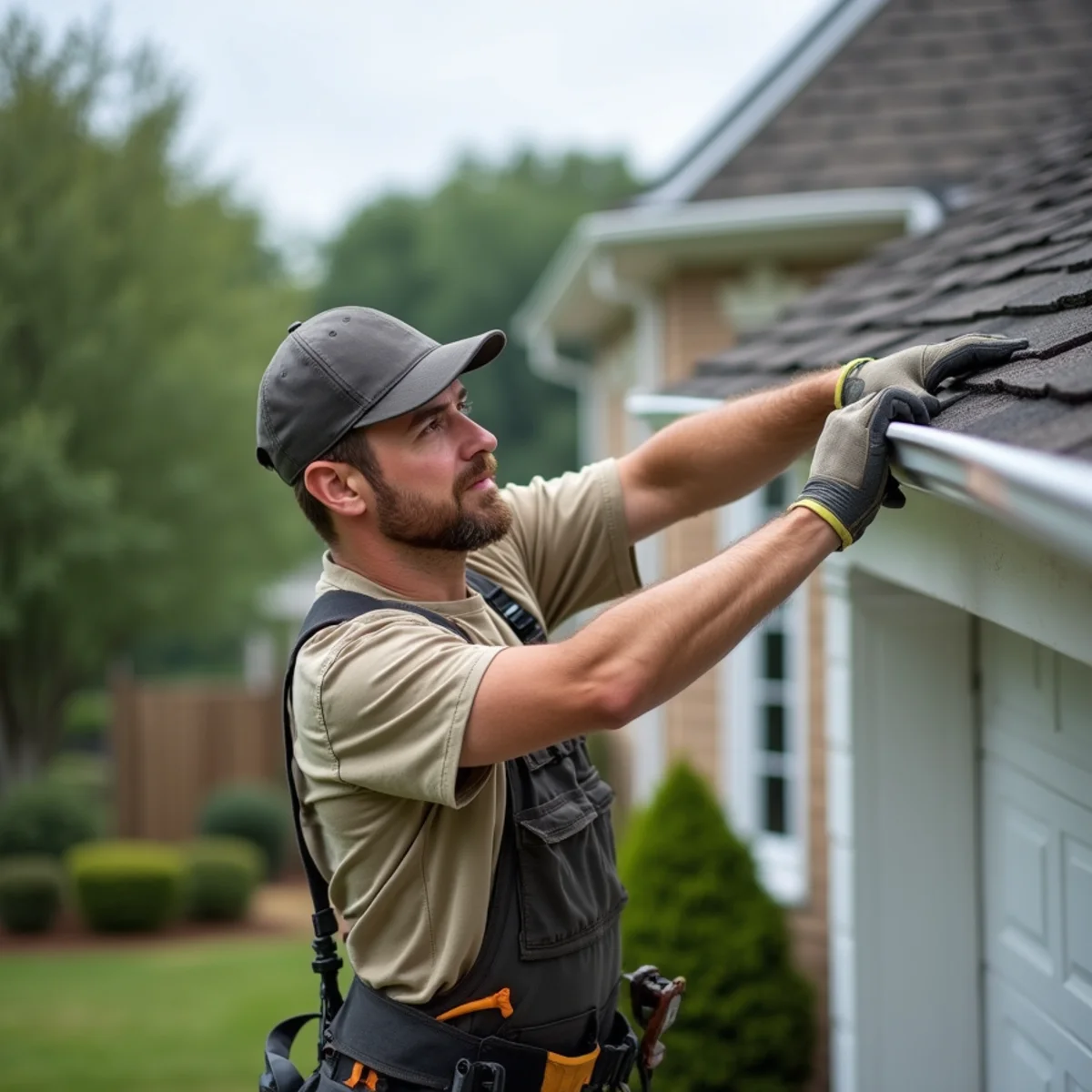
Clogged gutters are a storm-season disaster in slow motion. When leaves and debris block the flow, heavy rain backs up under the shingle edge, rots the fascia, and pours over the sides to erode your foundation. Before severe season:
- Clear all leaves, pine straw, and debris from the gutter troughs
- Flush the downspouts and confirm water runs freely and away from the house
- Check for sagging sections or gutters pulling away from the fascia
- Look for granules collecting in the gutters, a sign of shingle wear
If your gutters are undersized, failing, or constantly overflowing, upgrading to seamless gutters before the rains come is far cheaper than repairing the water damage that overflow causes.
4. Pipe boots and roof penetrations
Every pipe, vent, and penetration through your roof is sealed with a boot, and the rubber ones are a leading cause of leaks on roofs in the 10-to-15-year range. The rubber dries out, cracks, and splits under our UV before the shingles themselves ever fail. From the attic, look for staining or daylight around any penetration. A cracked boot is an inexpensive fix, but only if you catch it before the storm drives water straight through it.
5. The attic, from the inside
Your attic is the early-warning system most homeowners never check. On a bright day, go up and look for:
- Daylight showing through the roof boards
- Dark water stains or streaks on the decking or rafters
- Damp, matted, or discolored insulation
- Any musty smell, which points to trapped moisture
Water stains in the attic mean you already have an active or intermittent leak. Finding it now, dry and in daylight, is infinitely better than discovering it when the ceiling below lets go during a downpour.
6. Trees and overhanging limbs
In a region full of tall hardwoods and pines, especially around Lake Allatoona and the wooded neighborhoods of the foothills, overhanging limbs are one of the biggest storm threats to a roof. A single limb dropped by straight-line wind can punch through decking in an instant. Before severe season, look for dead or overhanging branches within striking distance of your roof and have them professionally trimmed back. If a tree does come down on your home, our tree damage roof repair crews handle the emergency, but prevention is always cheaper than repair.
7. Ridge, hip, and ridge-vent lines
The peaks of your roof, the ridges and hips, take the full force of the wind, and the ridge vent that runs along the top is a common leak point when its shingles or fasteners loosen. From the ground, look for lifted or missing ridge caps and any gaps along the vent line. Because these are the highest and most wind-exposed parts of the roof, a small failure here gets big fast in a storm.
8. Your documentation and baseline
This last one is not on your roof; it is in a folder. Before severe season, take clear, dated photos of your roof in good condition. If a storm damages it later, those "before" photos are powerful evidence for an insurance adjuster that the damage is new and storm-related, not pre-existing wear. Keep your policy details and a record of any recent maintenance in the same place. If you ever need to file, this baseline makes our insurance claim assistance far more effective.
Where a homeowner check ends and a professional one begins
This checklist will catch a great deal, and every item you handle is money and stress saved. But there is a real limit to what you can see safely from the ground, and the most important damage, hairline mat fractures, subtle flashing failures, soft decking, hides where an untrained eye and a pair of binoculars cannot reach. That is the gap our free 21-point roof inspection is built to close. A trained crew gets on the roof, checks all 21 points, and gives you documented photos of anything that needs attention before the weather turns. It is the natural companion to your own walk-around. If a storm has already hit, our guide on spotting hidden hail damage will help you know what to look for.
Local roofs, local storms
From Cartersville east to Woodstock, we inspect roofs in the same Dixie Alley storm belt where you live. We know which slopes take the prevailing wind, where our hail tends to hit hardest, and what our summer heat does to aging shingles, because we are out on these roofs every season.
Want to head into severe season with confidence? Do your walk-around, then let us handle the parts you cannot see safely. Call Eagles Roofing and Reconstruction at (855) 705-1940 to schedule your free 21-point roof inspection in Cartersville and across North Georgia. Catching a small problem before the storm is always cheaper than repairing the damage after it.
What You Can Safely Check From the Ground vs. What Needs a Pro
You can do a meaningful pre-storm check without ever leaving the ground, and you should never get on a roof you're not trained and equipped to walk. From your yard with binoculars, scan for shingles that are lifted, curled, cupped, or missing, and look for dark streaks or bare patches that signal granule loss. Walk your perimeter and check the gutters for accumulated granules, which look like coarse black sand and are an early warning that the shingle surface is wearing thin. Look up at the eaves for sagging, peeling paint, or rust streaks from failing fasteners, and glance into the attic on a sunny day for any pinpoints of daylight or water staining on the underside of the decking. All of that is safe, and all of it is useful.
What needs a professional is everything the ground view can't resolve: the condition of flashing around chimneys, skylights, and wall intersections; the integrity of valleys and ridge lines; soft or spongy decking you can only feel underfoot; and hail bruising that reads as nothing from forty feet away. This is where our free 21-point inspection earns its keep, because trained eyes and safe access find the developing failures before a storm exploits them. The most valuable thing you can do before severe season, beyond the inspection itself, is document: take dated, timestamped photos of your roof and gutters now, while it's intact. That pre-storm baseline is the single strongest piece of evidence an adjuster can be handed if hail or wind hits, because it proves what the damage did and when. Call (855) 705-1940 to get on the schedule before the season turns.
Key Takeaways
- From the ground with binoculars you can safely spot lifted, curled, or missing shingles and dark granule-loss streaks.
- Granules collecting in gutters like coarse black sand are an early sign the shingle surface is wearing out.
- Leave flashing, valleys, ridge lines, soft decking, and subtle hail bruising to a pro with safe roof access.
- Take dated, timestamped photos of your intact roof now — a pre-storm baseline is powerful evidence for any future claim.
- Schedule a free 21-point inspection before severe season by calling (855) 705-1940.
Frequently Asked Questions
How often should I inspect my roof in Georgia?
At minimum, do a ground-level and attic check before severe season each spring, and again after any major hail or wind event. Because North Georgia sits in Dixie Alley, roofs here take more of a beating than in calmer climates, so a professional inspection every year or two is a sound habit.
What's the most commonly missed item on a pre-storm roof check?
Pipe boots and flashing. Homeowners focus on shingles, but the cracked rubber boot around a vent pipe and the failed flashing at a chimney or valley cause a large share of leaks, and both fail well before the shingles do. They are cheap to fix if caught before the storm drives water through them.
Can I do a roof inspection myself, or do I need a professional?
You can safely do a lot from the ground with binoculars and from inside your attic, and this checklist covers it. But the most important damage, like hairline mat fractures and soft decking, hides where you cannot see it safely. That is why we pair your walk-around with a free 21-point professional inspection. Call (855) 705-1940 to schedule one.
Have a Roofing Question of Your Own?
Eagles Roofing and Reconstruction offers free, no-obligation roof inspections across Cartersville and North Georgia. Get honest answers from a local roofer.