
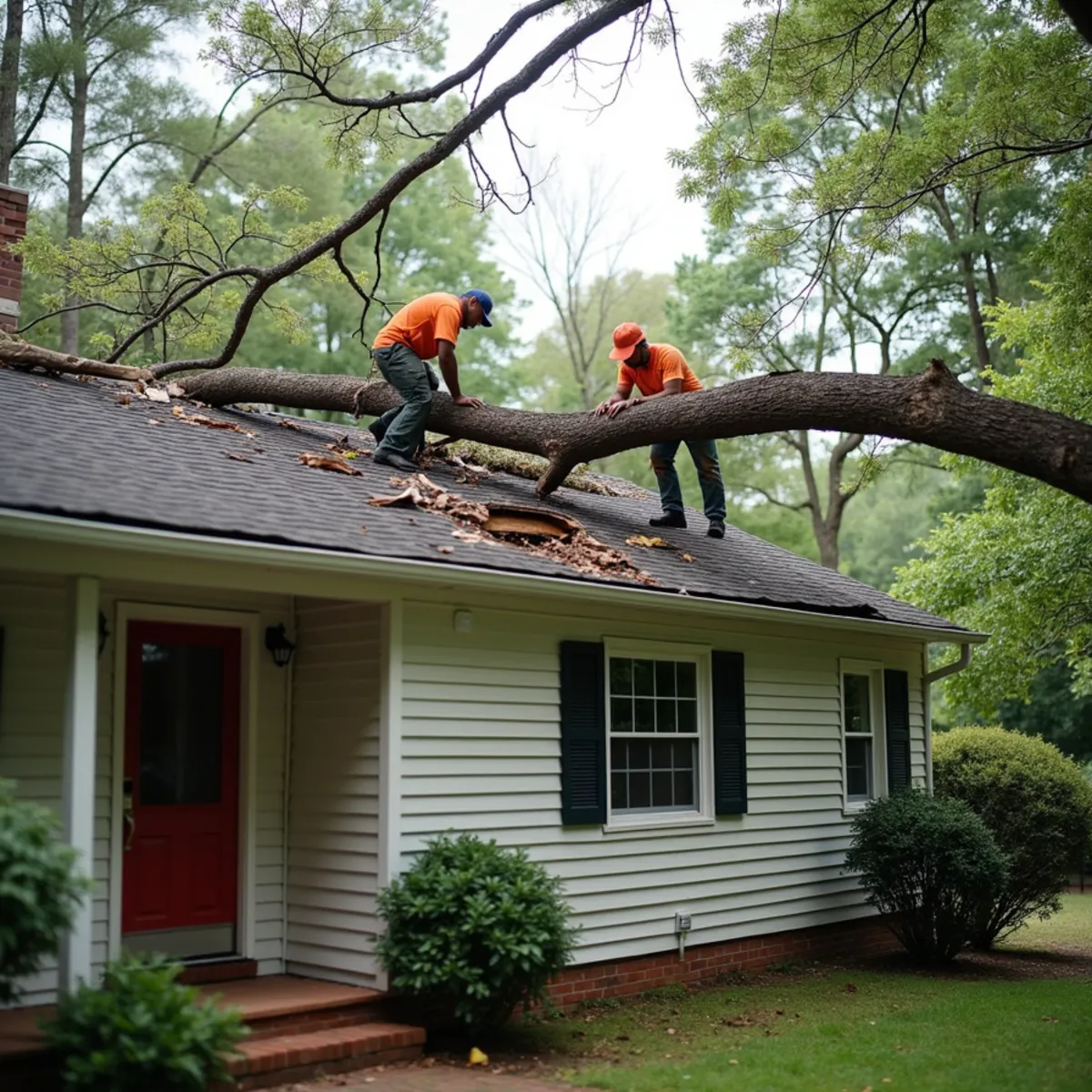
North Georgia's dense tree canopy is beautiful — until a storm drops a limb or a whole tree onto your roof. A tree strike is both an emergency and a structural repair: the immediate job is to stop water and stabilize the opening, and the real job is rebuilding whatever the impact broke, from decking to rafters to trusses.
Eagles Roofing handles both. We respond fast to tarp and secure the damage, then rebuild the structure properly — not just skin over the hole. Because we're a roofing and reconstruction company, we can take a tree-strike from crisis to fully restored roof under one roof.
Tree & Limb Damage We Repair
- A tree or large limb resting on or through the roof
- Punctures and holes in the decking and shingles
- Cracked or broken rafters and trusses
- Sagging rooflines from structural impact
- Scraped, gouged, or displaced shingle sections
- Water intrusion through the impact opening
Step One: Secure and Stabilize
When a tree hits your roof, the priorities are safety and stopping water. We assess whether the structure is stable, coordinate safe removal of the tree or limb where needed, and install emergency tarping over the opening to keep rain out. We document the damage thoroughly for your insurance claim from the very first visit.
A tree strike often damages more than it appears to. The impact can crack rafters and trusses well beyond the visible hole, so we inspect the framing carefully before deciding on the repair scope.
Step Two: Rebuild It Right
Once the structure is secure, we rebuild. That can mean sistering or replacing cracked rafters, reframing damaged trusses, replacing decking, and then installing new underlayment and roofing that ties cleanly into the surrounding roof. Because we handle reconstruction, there's no handoff to a separate framing contractor — we own the whole repair.
We match your existing roofing as closely as possible so the repair blends in, and we make sure the rebuilt section is as strong as — or stronger than — what was there before. When we're done, the only evidence a tree ever hit your roof is your story about it.
Structural Assessment and the Reconstruction Rebuild Process
When a tree or heavy limb hits a roof, the visible hole is rarely the whole story. Our first job is structural triage: we get into the attic to read the framing before anyone walks the deck. We check rafters and truss chords for cracked, split, or deflected members, look for sheared truss plates at the heel joints, and probe decking for delamination where OSB has taken a point load. A strike that looks like decking damage often telegraphs down into a broken rafter or a compromised top chord. Truss webs are engineered as a system, so we never sister or cut one without matching the original design loads.
The rebuild follows that diagnosis in order. We shore the framing, replace broken rafters or order engineered truss repairs, then re-sheath with the correct thickness decking and proper H-clips and edge gaps. From there it is a true reconstruction, not a patch: new underlayment lapped into the surrounding field, ice-and-water in valleys and at the repair perimeter, then shingles woven and color-matched to the existing roof so the tie-in is weathertight and not obvious. Because North Georgia's tree canopy means these hits often come during storms, our 24/7 crews tarp and dry-in the same day, then schedule the permanent rebuild once the framing scope is confirmed. Call (855) 705-1940.
Why Choose Eagles Roofing for Tree Damage
- Roofing and reconstruction under one company — no contractor handoff
- Emergency tarping to stop water immediately
- Structural framing and truss rebuilds done right
- Thorough documentation for your insurance claim
- Repairs that tie cleanly into your existing roof
What Affects the Cost
We never quote a real roof from a phone call. Instead, here are the honest factors that shape your price — all assessed during your free inspection so you get a firm, written number with no surprises.
Structural extent
Surface punctures cost far less than repairs involving broken rafters or trusses.
Tree removal
Safely removing the tree or limb from the roof may involve coordinated crews.
Reframing & decking
Rebuilding framing and replacing decking adds structural labor and materials.
Insurance coverage
Tree-strike damage is often covered; we document from the first emergency visit.
Common Tree Damage Mistakes We Fix
A lot of our work is correcting shortcuts other crews took. Here are the mistakes we see most on tree damage jobs around Cartersville — and how we do it right instead.
Dragging the limb off before the roof is stabilized
Crews winch a fallen tree off with a truck or chainsaw in a hurry, gouging shingles and splintering decking the fall itself never touched. We section heavy limbs and lift the weight in pieces, supporting the load as it comes off, so removal stops the damage instead of doubling it.
Tarping flat instead of lapped up-slope
A tarp stapled down over the hole funnels wind-driven North Georgia rain straight underneath it. We run emergency tarps well up-slope and over the ridge, fasten into sound wood with capped furring boards, and lap the material shingle-style so water actually sheds off the cover until the permanent repair.
Patching the puncture and ignoring the impact zone
The obvious hole gets closed while granule-stripped, fractured shingles all around the strike keep wicking water in for weeks. We inspect the full impact radius for hidden mat bruising and cracked tabs, then replace the compromised field, not just the one spot where the branch broke through.
Need Tree Damage in the Cartersville Area?
Call Eagles Roofing and Reconstruction for a free, no-obligation inspection and a firm written estimate. Fast response across Bartow County and North Georgia.
Tree Damage Across Cartersville & North Georgia
Eagles Roofing and Reconstruction delivers tree damage from our Cartersville hub to homeowners and businesses throughout Bartow County and the greater Atlanta metro. Wherever you are, you get the same free 21-point inspection, written scope, and workmanship guarantee — with fast response for storm and leak emergencies.
See every community we cover on our roofing service areas page.
Related Reading
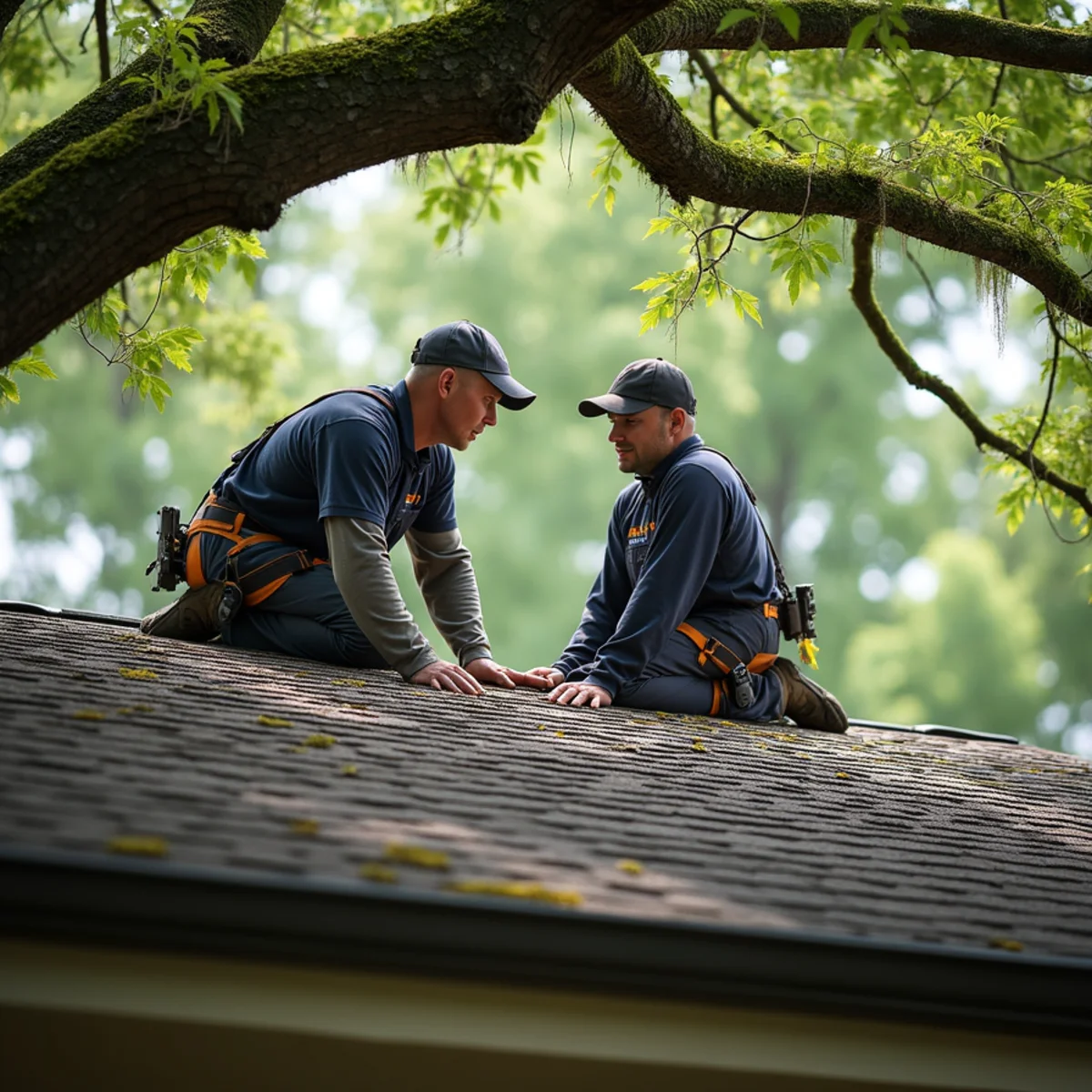
The Danger of Tree Overhang: How Moss, Fallen Branches, and Scratched Granules Rot Roofs
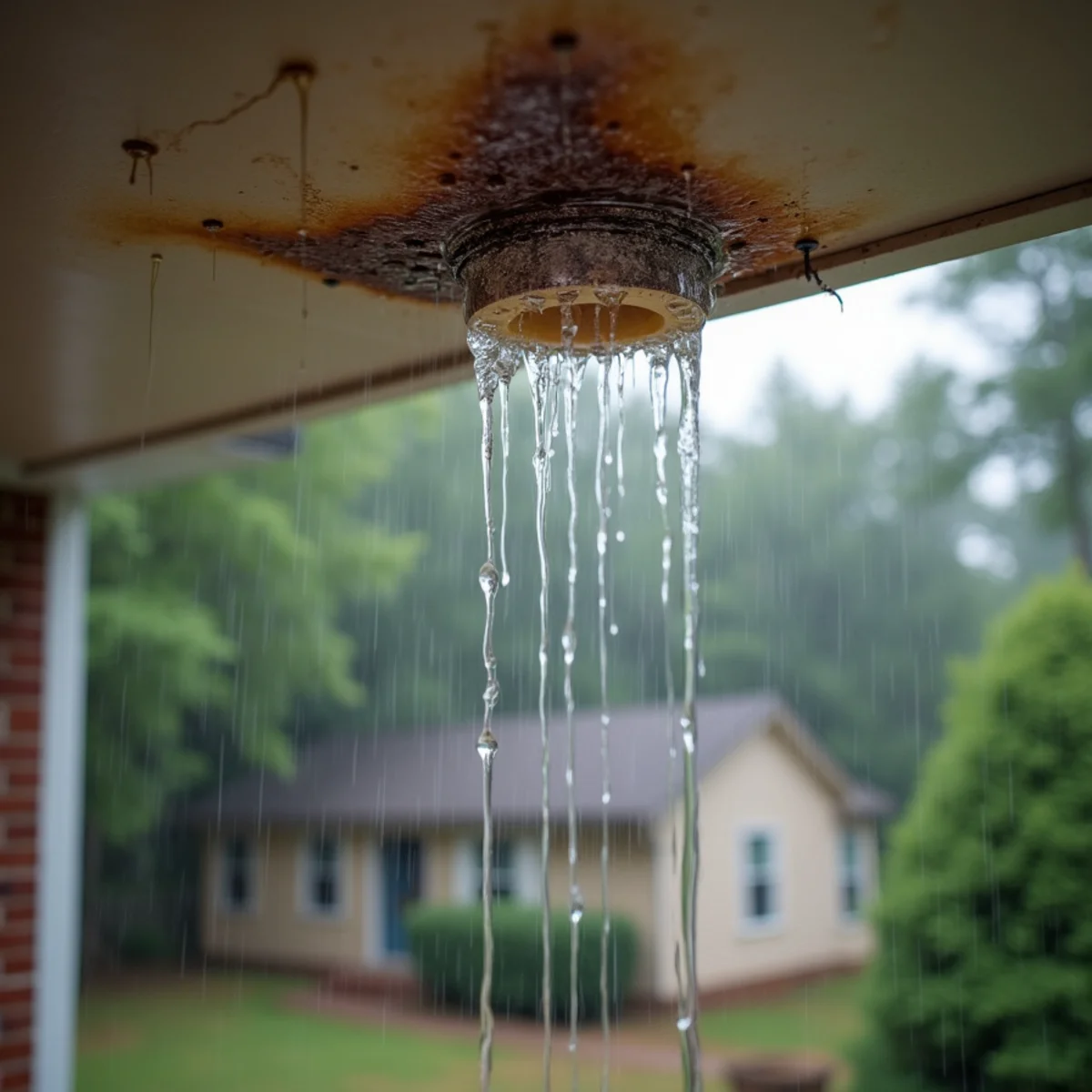
What to Do Immediately When Your Roof Springs an Active Leak During a GA Storm
The Eagles Roofing Standard for Tree Damage
Tree strikes rarely cause just one clean hole. The real damage hides in bruised shingles, loosened fasteners, and a deck flexed beyond what you can see from a ladder. We remove weight safely, dry-in the opening so the next storm cannot make it worse, and document everything for your claim before permanent work begins. When a tree hits your roof, call (855) 705-1940 for 24/7 emergency response and a free 21-point inspection so nothing gets skinned over.
Tree Damage FAQs
A tree fell on my roof — what should I do first?
Get everyone to a safe part of the home or outside, then call us at (855) 705-1940. Don't try to remove the tree yourself or climb onto the roof. We'll assess stability, secure the opening with tarping, and document everything for your insurance claim.
Can you handle the structural rebuild, not just the roofing?
Yes — that's the reconstruction half of our name. We rebuild damaged rafters, trusses, and decking and then re-roof the section, all with one team. You don't have to coordinate a separate framing contractor.
Will insurance cover a tree falling on my roof?
Tree-strike damage from storms is commonly covered by homeowner policies, including structural repairs and emergency mitigation. We document the damage thoroughly and work with your adjuster to support the claim.
Do I need an engineer's report for tree damage to my roof?
For most limb strikes, our inspection documents the framing damage clearly enough for repair and for your insurer. When a large tree compromises multiple trusses, a ridge beam, or bearing walls, a licensed structural engineer's letter is warranted, and we will tell you honestly when that line is crossed. We coordinate directly with the engineer so the repair plan matches their specified loads. Call (855) 705-1940 and we will scope it on a free inspection.
Should I have the tree removed before you repair the roof?
We assess that on arrival. Often the safest sequence is to stabilize the structure and tarp the opening first, then coordinate safe removal of the tree or limb before the structural rebuild. We handle the roof and reconstruction; heavy tree removal may involve a coordinated crew.