When a North Georgia thunderstorm rolls in off the Etowah River and water suddenly starts dripping through your ceiling, the clock is running. Every minute that water sits inside your home, it soaks insulation, saturates drywall, and works its way toward wiring and framing. The good news is that the first hour matters more than almost anything else, and most of what you need to do in that hour requires nothing but a bucket, a few towels, and a level head.
We built this guide from what our crews actually walk homeowners through over the phone during severe weather. Here is exactly what to do, in order, and what to leave to the professionals.
Step 1: Protect people and electronics first
Before you worry about the drywall, look at what is underneath the leak. If water is dripping anywhere near a light fixture, ceiling fan, outlet, or electrical panel, treat it as a live hazard. Water and electricity together can energize surfaces you would never expect.
- Move anyone away from the wet area, especially children and pets.
- If water is near a fixture or you see it bubbling behind a wall switch, shut off power to that part of the house at the breaker.
- Relocate TVs, computers, and anything with a plug out of the splash zone.
Do not stand in standing water to flip a switch. If you cannot reach the breaker safely, leave it and call an electrician.
Step 2: Contain the water and control where it goes
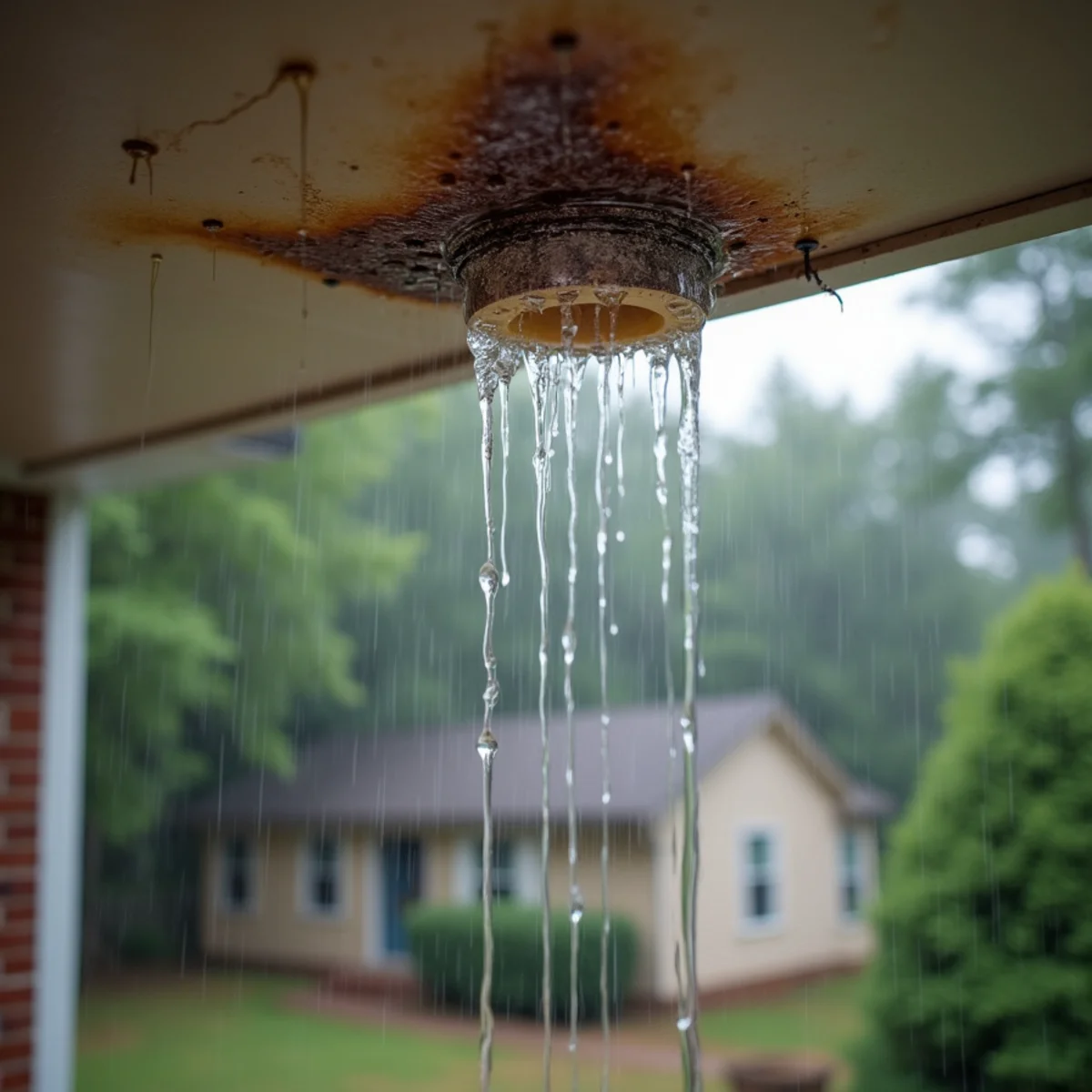
Your goal now is to channel the leak into a container instead of letting it spread across the ceiling. Grab buckets, trash cans, or storage totes and place them directly under each drip. Lay old towels around the base to catch splashback, and put a board or a folded towel in the bottom of the bucket to quiet the noise and reduce splatter.
If water is spreading across a wide area of ceiling rather than dripping from one spot, that usually means it is pooling above the drywall and traveling along a joist before it finds a low point. Move your containers to the lowest edge of the stain.
Relieve a bulging ceiling before it bursts
This part feels wrong, but it is important. If you see a section of ceiling sagging or bulging with a bubble of trapped water, that pocket can hold gallons. When it lets go on its own, it comes down all at once and takes the drywall with it. Put a large container underneath, then carefully poke a small hole at the very center of the bulge with a screwdriver to let the water drain in a controlled stream. Draining it deliberately does far less damage than a sudden collapse.
Step 3: Protect your belongings and the floor
Water finds the path of least resistance, and hardwood, laminate, and subflooring all suffer quickly. Pull furniture, rugs, and boxes out of the room, or at least cover them with plastic sheeting or garbage bags. If you have anything with real value or sentiment nearby, get it out entirely.
Step 4: Document everything for your insurance claim
Before you clean anything up, take photos and short videos of the active leak, the ceiling stains, the pooling water, and any damaged belongings. Timestamped evidence from during the storm is far more persuasive to an adjuster than a dry ceiling photographed three days later. Save these; they become the backbone of a strong claim.
Insurance carriers move faster when the paper trail is clear. If the leak turns into a covered claim, our team walks homeowners through the process with our roof insurance claim assistance so nothing gets missed.
Step 5: Find the source, but stay off the roof
It is tempting to grab a ladder and go looking for the hole, but a wet roof in an active storm is one of the most dangerous places you can be. Lightning, slick shingles, and gusting wind send people to the emergency room every severe season here in Dixie Alley. Do your detective work from inside.
Keep in mind that the spot where water enters your ceiling is rarely directly below the actual breach. Water can travel several feet along the underside of the decking or down a rafter before it drips. Common entry points include:
- Failed or lifted flashing around chimneys, skylights, and vent pipes
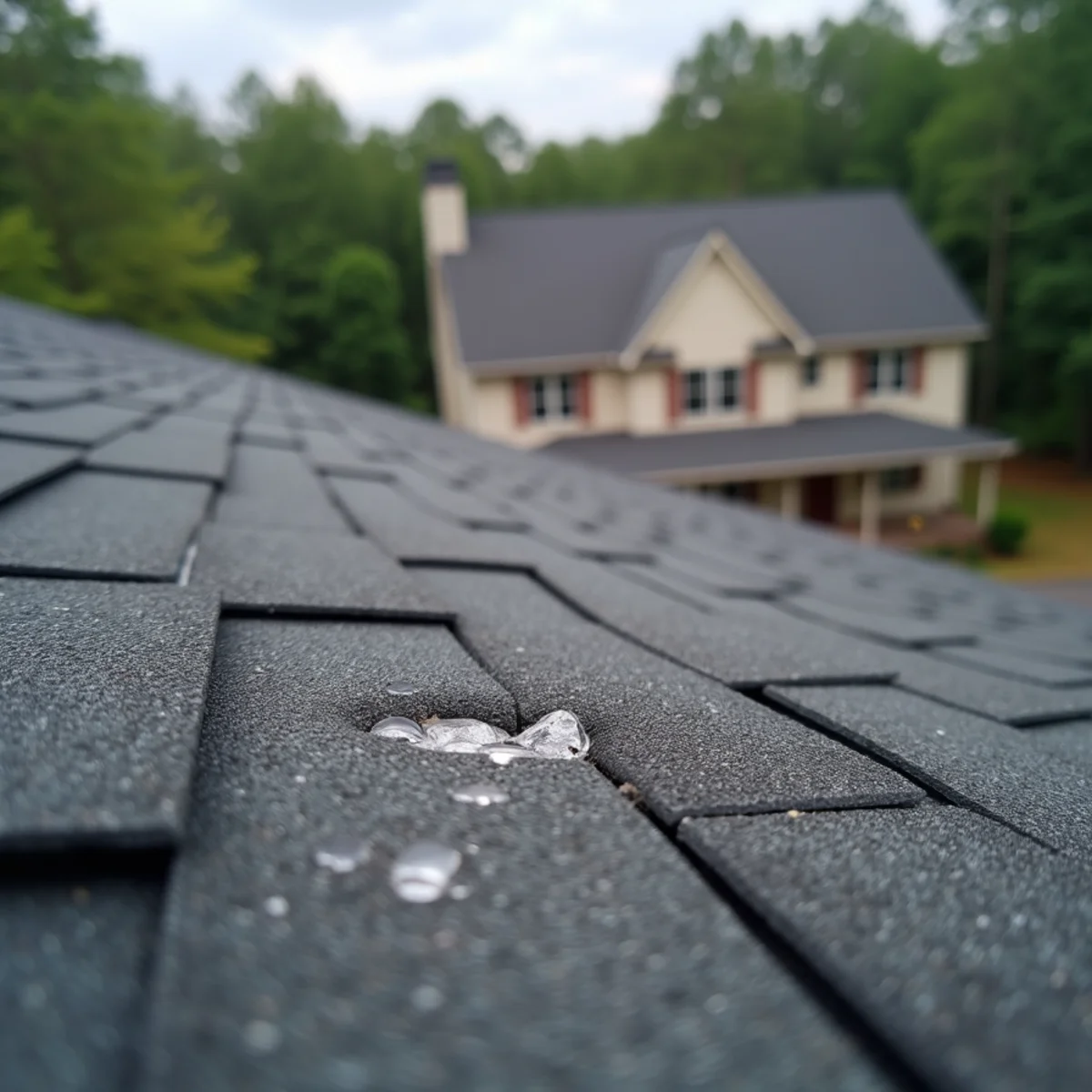
- Missing or wind-torn shingles after straight-line wind or hail
- Cracked pipe boots, which are a leading cause of leaks on 10-to-15-year-old roofs
- Ice-dam or debris backups in the valleys where two roof planes meet
Step 6: Get an emergency tarp on it
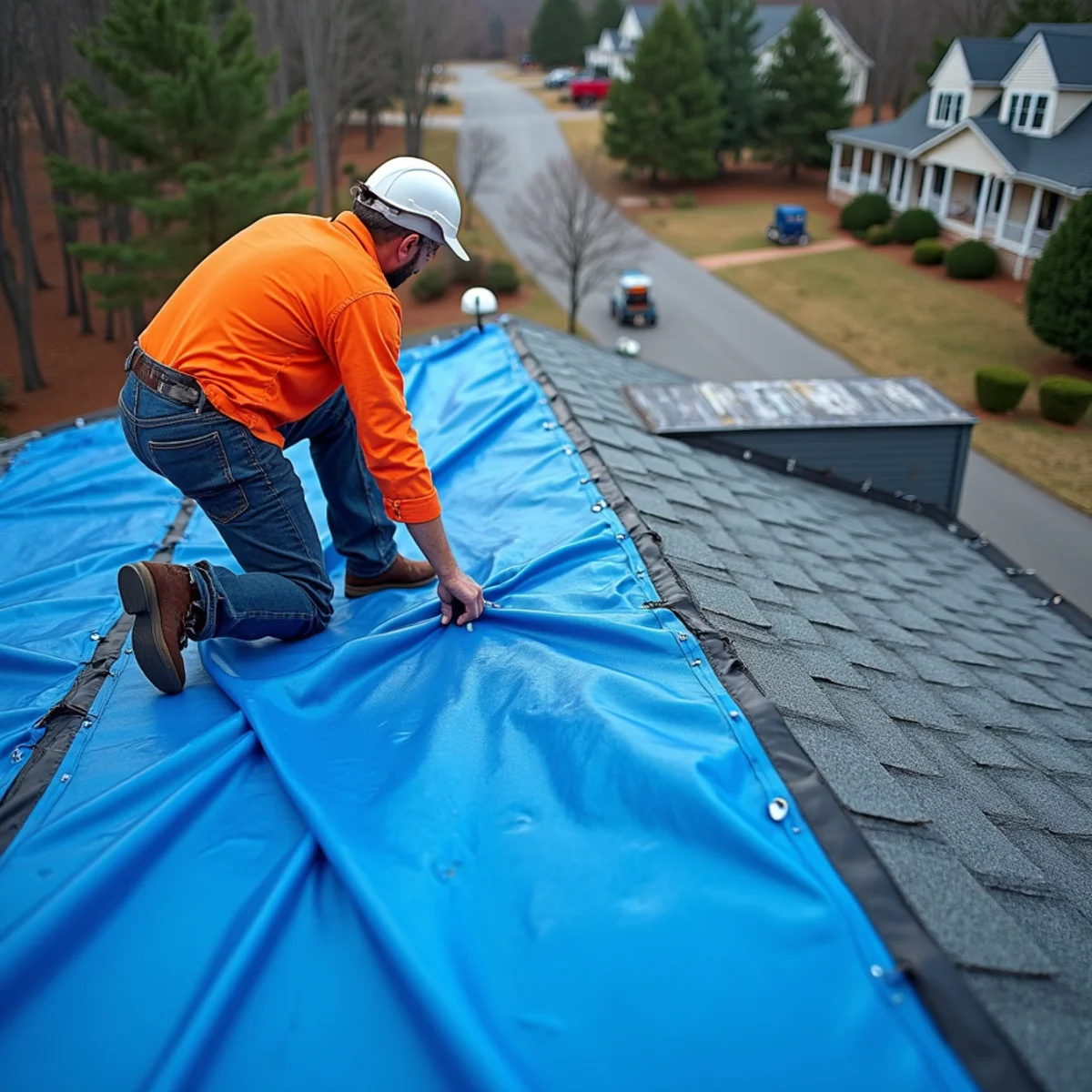
Once the immediate mess is contained, the priority becomes keeping more water out until a permanent repair is possible. A properly installed tarp, anchored above the leak and run over the ridge so water sheds off instead of pooling under it, can hold a home for weeks. This is not a job to improvise in a lightning storm, though. Our crews handle emergency roof tarping around the clock and can secure your home safely once conditions allow. Learn more about why this step matters so much in our guide to how emergency tarping prevents catastrophic interior damage.
Step 7: Call for professional leak repair
Containing water buys you time; it does not fix the roof. Trapped moisture inside walls and ceilings can grow mold within 24 to 48 hours, so the sooner a professional traces the true source and dries things out, the less you spend in the end. Our ceiling leak emergency repair team locates the entry point, stops the intrusion, and coordinates the drywall and structural drying that follow. If the storm caused broader damage, our storm damage roof repair crews handle the full restoration.
Why local response time matters
Because we are based right here in Cartersville and serve all of Bartow County, our crews are often on-site the same day a storm passes, not days later like the out-of-town chasers who follow the hail. Fast local response is the difference between a stained ceiling and a gutted room.
Roof actively leaking right now? Do not wait for the water to find your floors. Call Eagles Roofing and Reconstruction at (855) 705-1940 for emergency leak response across Cartersville and North Georgia. We will help you stabilize the situation over the phone and get a crew out to stop the water at its source.
What Our Crews Trace Once the Emergency Is Contained
Once the bucket is under the drip and the water is off your floor, the real diagnostic work starts, and it rarely begins where you saw the stain. Water almost never enters directly above where it shows up inside. It finds a compromised fastener, a lifted shingle, or a failed flashing seam, then rides the underside of the decking, follows a rafter, and travels along the path of least resistance until gravity and a low point let it drop. On a North Georgia roof with long runs and valleys funneling heavy rain, we've traced entry points six to ten feet uphill from the ceiling stain. That's why we never patch the spot under the stain and call it done.
Our crews read the assembly in layers. We pull back insulation to check for the telltale fan-shaped staining on decking that points back toward the entry, look for rusted nail shanks and darkened truss edges that mark a chronic path, and probe for soft or delaminated OSB that's been wet for more than one storm. Flashings at chimneys, skylights, and wall intersections get the hardest scrutiny, since those fail far more often than the field of the shingles. We also check the attic side of the leak for mold bloom and the underlayment for saturation, because a roof that leaks once in a hard rain usually has a developing problem, not a freak event. If you're mid-storm and the water is active, call us at (855) 705-1940 and we'll walk you through safe containment before we ever get on the roof.
Key Takeaways
- The entry point is almost never directly above the interior stain — water travels along decking and rafters before it drops.
- Contain first: move valuables, catch the drip, and relieve a bulging ceiling with a small drain hole before it collapses.
- Flashings at chimneys, skylights, and wall junctions fail far more often than the shingle field itself.
- A roof that leaks in heavy rain usually signals a developing problem, not a one-time fluke — get it traced properly.
- For an active leak during a storm, call (855) 705-1940 for 24/7 guidance and emergency response.
Frequently Asked Questions
Should I poke a hole in my sagging ceiling during a leak?
Yes, if a section is visibly bulging with trapped water. Place a bucket underneath and carefully pierce the center with a screwdriver to drain it in a controlled way. A slow, deliberate drain does far less damage than a sudden collapse that brings the whole drywall panel down at once.
Why is my ceiling leaking in a spot with no roof damage above it?
Water rarely drips straight down. It travels along the underside of the roof decking or down a rafter until it finds a low point, so the ceiling stain can be several feet from the actual breach. That is why professional leak tracing matters before repairs begin.
How fast can Eagles Roofing respond to an active leak in Cartersville?
Because we are based in Cartersville and serve Bartow County directly, our crews are frequently on-site the same day, especially after a storm. Call (855) 705-1940 and we will help you stabilize things immediately.
Have a Roofing Question of Your Own?
Eagles Roofing and Reconstruction offers free, no-obligation roof inspections across Cartersville and North Georgia. Get honest answers from a local roofer.