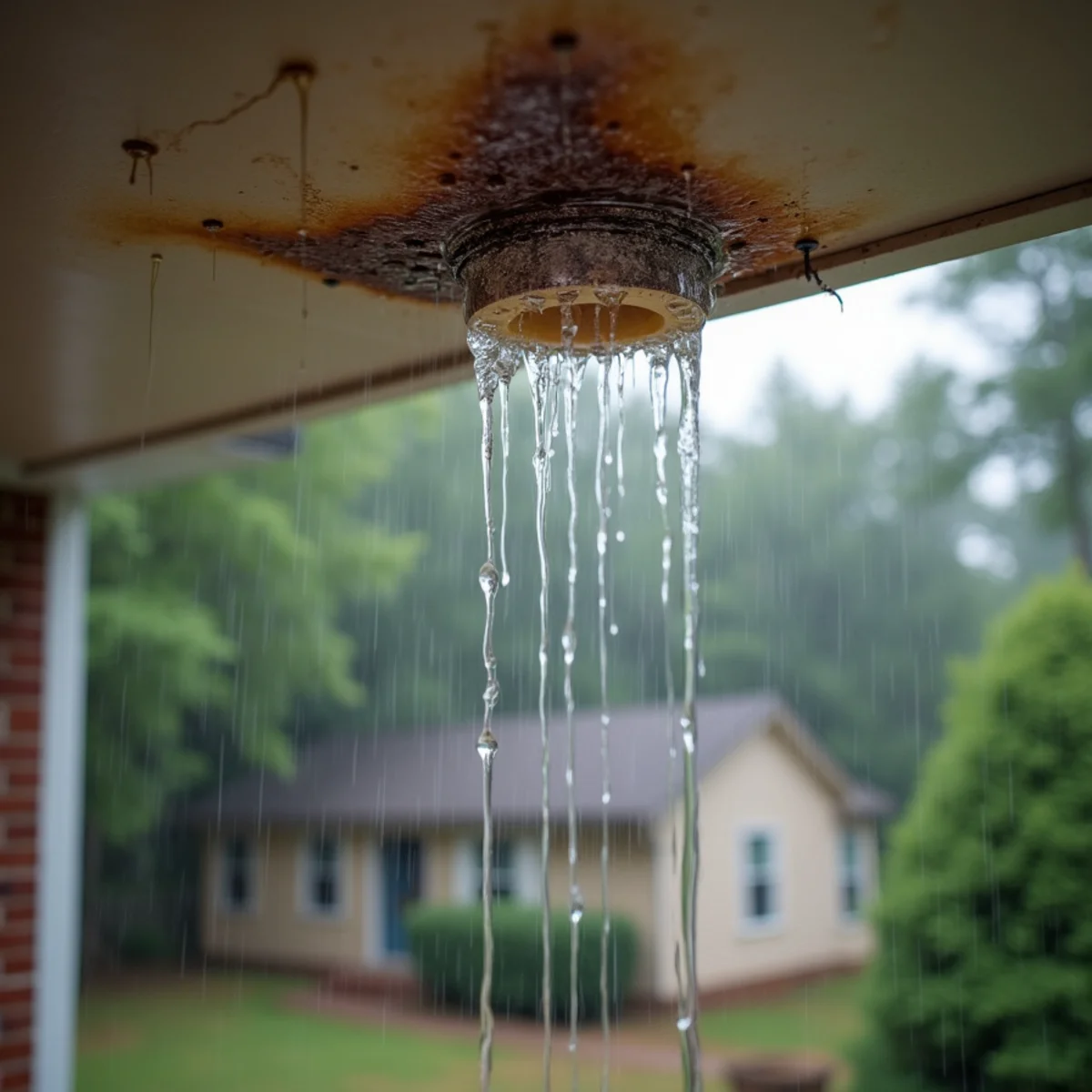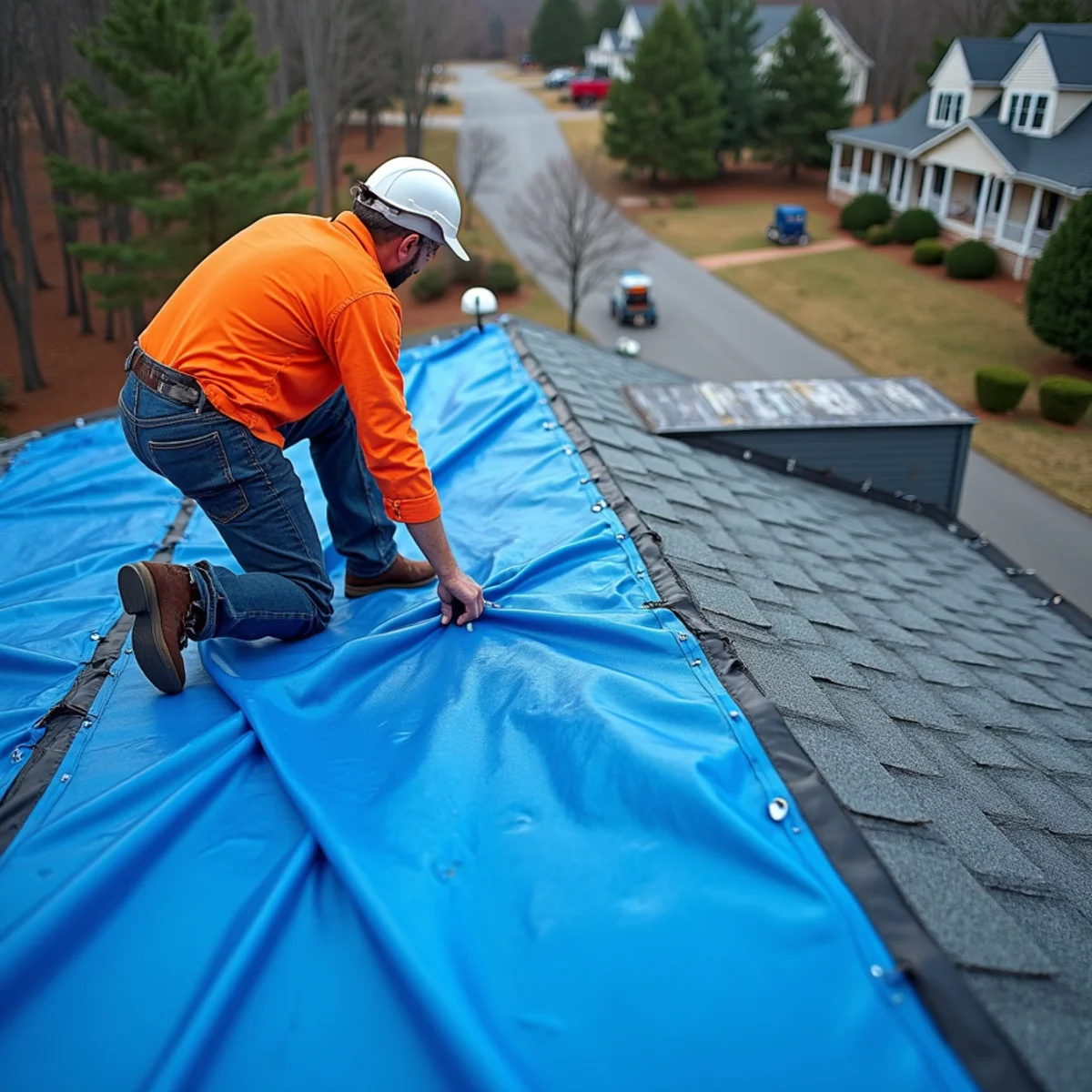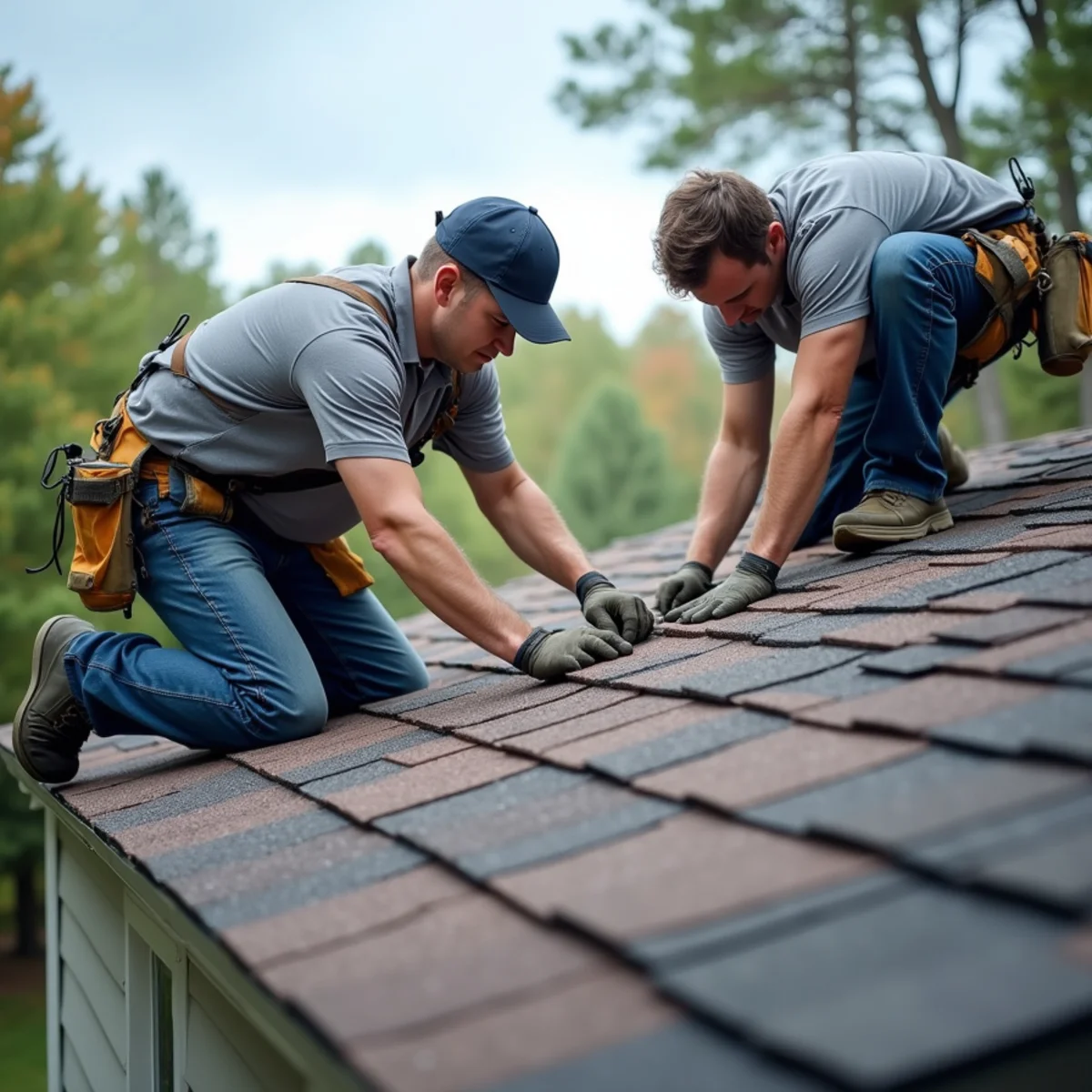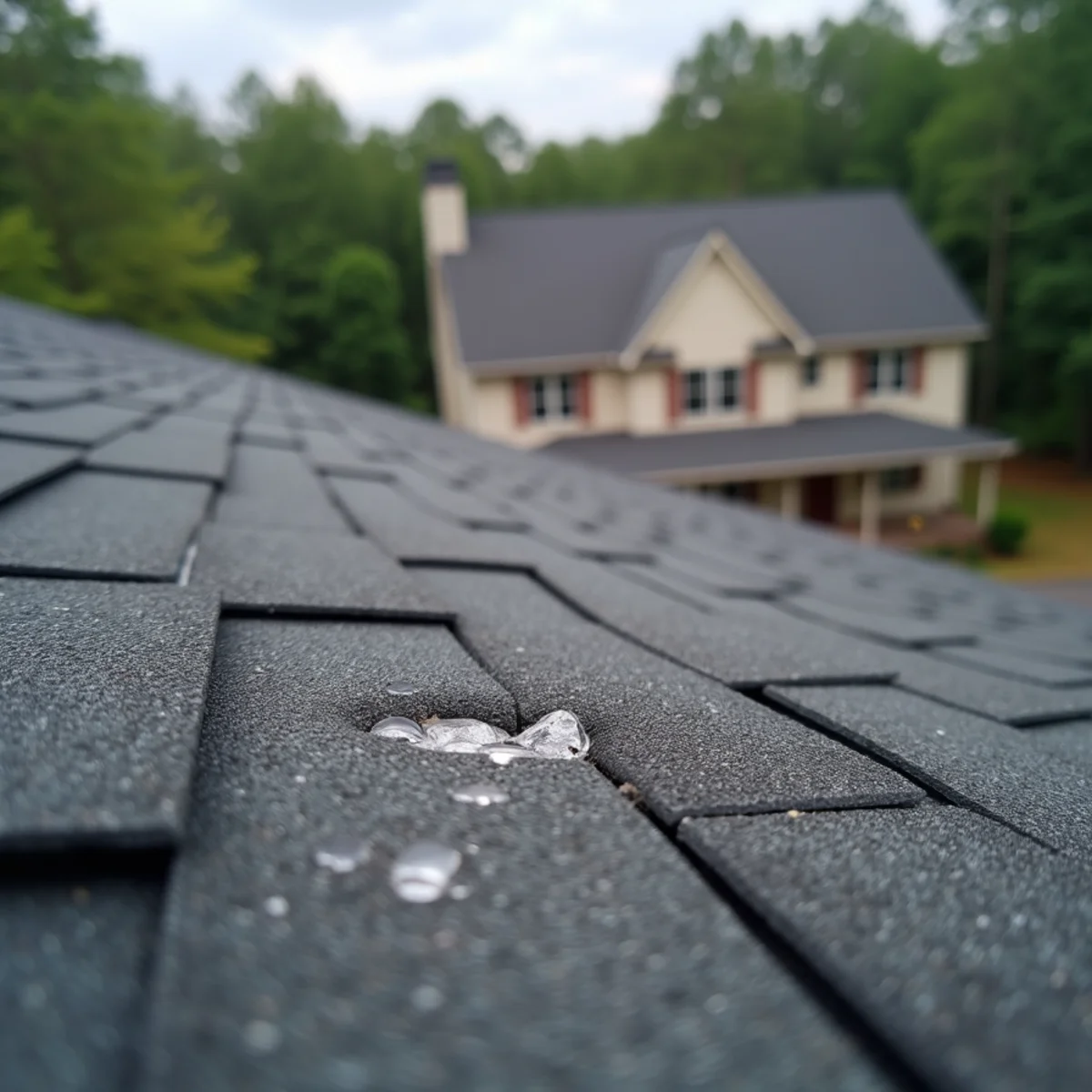
Hail damage is the sneakiest problem in roofing. Unlike a tree through the roof or shingles scattered across the yard, hail rarely announces itself. A storm blows through North Georgia, dumps marble-to-golf-ball-sized ice on your roof for ten minutes, and moves on. Your roof looks fine from the driveway. Months later, you have a leak, and by then the insurance window that would have paid for the repair may have closed. Learning to read the early signs is one of the most valuable things a homeowner in Dixie Alley can do.
What hail actually does to a shingle
To spot the damage, it helps to understand the mechanism. An architectural, or "dimensional," shingle is built in layers: a fiberglass mat, a waterproofing asphalt coating, and a top layer of ceramic granules that shield the asphalt from the sun's UV rays. Those granules are the shingle's sunscreen.
When a hailstone strikes, it does two things. First, it knocks granules loose, exposing the asphalt underneath. Second, and more seriously, the impact can bruise or fracture the mat below the surface, the same way a hard knock bruises fruit. That bruise breaks the mat's integrity even when the surface still looks intact. Once the protective granules are gone, UV exposure cooks the exposed asphalt, it dries out and cracks, and water eventually finds its way through. The leak you get in the fall is often the delayed result of a hailstorm the previous spring.
The signs you can look for from the ground
You do not need to climb up to gather the first clues. A safe inspection from the ground and from inside your home catches most of the early warning signs. Grab binoculars and walk the perimeter of your house after any significant storm.
Check the soft metal first
The easiest place to confirm hail hit hard is on metal, because metal dents and holds the record. Look at:
- Gutters and downspouts for dents and dings
- Metal roof vents, valleys, and chimney caps for pockmarks
- The AC condenser fins outside for flattening or bruising
- Window screens, mailboxes, and your car's hood
If your gutters and AC unit are dimpled, your shingles took the same beating. Metal damage is a reliable proxy for roof damage and strong evidence for an insurance adjuster.
Look for granules where water collects
As hail strips granules, they wash off the roof and collect at the bottom of downspouts and along the splash zones beneath them. A handful of what looks like coarse black sand at the base of a downspout after a storm is a classic sign of granule loss. Some granule shedding is normal on an aging roof, but a sudden pile after a specific storm points to impact.
Scan the shingles themselves
Through binoculars, look for spots where the color looks off, darker or shinier patches where the asphalt is exposed. On a dimensional shingle, hail bruising often appears as random dark circular marks scattered across the slopes that took the brunt of the storm, usually the west and south faces that face our prevailing storm tracks.
What hail damage looks like up close
A trained inspector confirms hail with a hands-on look, and knowing what they are searching for tells you why a professional inspection matters. Genuine hail hits share a recognizable signature:
- A random, scattered pattern, not the straight lines of foot traffic or the uniform wear of age
- Circular dark spots where granules are missing and the asphalt shows through
- A soft, bruised feel when pressed, indicating a fractured mat underneath
- Shiny or "spider-cracked" asphalt around the impact point
The bruising is the key distinction between real hail damage and cosmetic blemishes. A missing granule spot is a problem; a soft, fractured mat under that spot is a failure waiting to leak. This is why homeowners so often miss the damage, and why chasers so often exaggerate it. You need someone who knows the difference.
Why the timing on an insurance claim matters
Most homeowner policies have a limited window to file a hail claim, and many require the damage to be tied to a specific dated storm event. This is the trap of hidden hail damage: by the time the delayed leak appears, you may be outside the window, and you are now paying out of pocket for damage a claim would have covered. Getting your roof inspected promptly after any hailstorm, even when it looks fine, is how you protect that option. Our team documents everything to the storm date and helps you through the process with our roof insurance claim assistance.
Get a professional set of eyes on it
The honest truth is that ground-level signs get you suspicious, but confirming hail damage safely and accurately requires a trained inspector on the roof. Walking a wet or steep roof is dangerous, and untrained eyes miss bruising while over-reading normal wear. Our free 21-point roof inspection puts an expert on your roof to document exactly what the storm did, with photos tied to the date, so you know whether you are looking at a minor hail damage repair or a full claim. Before your next storm season, it is also worth running through our pre-storm roof inspection checklist to know your roof's baseline condition.
Serving the hail belt of North Georgia
From Cartersville down through Kennesaw and the northwest metro, our service area sits squarely in the path of the spring and summer hail that rolls across the Southeast. We inspect these roofs every season and know exactly what our local storms leave behind.
Did a hailstorm pass over your neighborhood? Do not wait for the leak to tell you what you already suspect. Call Eagles Roofing and Reconstruction at (855) 705-1940 to schedule your free 21-point inspection. We will document any hail damage while your claim window is still open and give you an honest assessment, whether you need a repair or nothing at all.
Functional vs. Cosmetic Damage and the Adjuster's Lens
Not all hail hits are created equal, and the distinction decides whether a claim pays. Functional damage is a bruise or fracture that actually shortens the shingle's service life: the mat is cracked, the self-sealing strip is compromised, or the protective granule layer has been knocked loose exposing the asphalt beneath. Cosmetic damage scuffs the surface without affecting performance. The problem is that what looks cosmetic from the ground is frequently functional up close, because a fresh hail bruise feels soft and spongy when you press it, like the give in an overripe piece of fruit, and that soft spot is a fractured fiberglass mat that will fail years early. This is exactly the hidden damage homeowners miss on architectural shingles after a North Georgia storm.
Granule loss is the mechanism that quietly steals a roof's lifespan. Those granules are the shingle's sunscreen, and once hail scatters them, UV radiation attacks the exposed asphalt, which dries, shrinks, and cracks far ahead of schedule. A roof that should have lasted another fifteen years can lose a third of its life from a single significant storm. Adjusters evaluate this on a test-square basis, typically marking hits within a 10-by-10-foot section on each slope and comparing against the impact threshold their carrier uses, while also weighing soft metals, vents, and gutters as corroborating evidence. Their incentive is to find the minimum that triggers coverage, so thorough, well-documented inspections matter. We document every slope to the adjuster's own standard; call (855) 705-1940 to schedule a free inspection before hidden hail damage becomes a leak.
Key Takeaways
- Functional damage (cracked mat, loosened granules, broken seal) shortens shingle life; cosmetic damage does not — only functional damage supports a claim.
- A fresh hail bruise feels soft and spongy to the touch, like overripe fruit — that give means a fractured mat underneath.
- Granule loss exposes the asphalt to UV, and a single storm can strip years off a roof's lifespan.
- Adjusters score hits within 10-by-10-foot test squares and check soft metals, vents, and gutters as corroborating evidence.
- Document every slope thoroughly — a free inspection at (855) 705-1940 catches hidden damage before it turns into a leak.
Frequently Asked Questions
Can I have hail damage even if my roof isn't leaking yet?
Absolutely, and that is the danger. Hail knocks off protective granules and can bruise the shingle mat without causing an immediate leak. UV exposure then breaks down the exposed asphalt over months, so the leak often appears a season or two after the storm, sometimes after the insurance window has closed.
What's the easiest sign of hail damage I can check myself?
Look at soft metal. Dents in your gutters, downspouts, metal vents, and the aluminum fins of your outdoor AC unit are reliable proof that hail hit hard. If those are dimpled, your shingles almost certainly took damage too, even if you cannot see it from the ground.
How long do I have to file a hail damage insurance claim in Georgia?
It varies by policy, but many carriers require claims within a set period after the storm and tie the damage to a specific dated event. That is why we recommend a prompt inspection after any hailstorm, even one that looks harmless, so your options stay open. We document everything to the storm date.
Have a Roofing Question of Your Own?
Eagles Roofing and Reconstruction offers free, no-obligation roof inspections across Cartersville and North Georgia. Get honest answers from a local roofer.