Drive through any neighborhood in Cartersville or along the wooded lots near the Etowah River and Red Top Mountain, and you'll see the same thing on nearly every street: mature oaks, hickories, and pines leaning their branches out over rooftops. That dense tree canopy is one of the best things about living in North Georgia. It's also one of the quietest threats to your roof.
Most homeowners think about trees only when a limb comes crashing down in a storm. But the slow, day-after-day damage from overhanging branches does far more to shorten a roof's life than any single dramatic event. At Eagles Roofing and Reconstruction, we see it constantly across Bartow County, and the story is almost always the same: a roof that should have lasted 25 years is failing at 15 because of what's growing above it.
How Overhanging Branches Wear Down a Roof
The damage from tree overhang isn't one problem. It's three problems working together, and each one makes the others worse.
Abrasion: The Branches That Scratch Away Your Granules
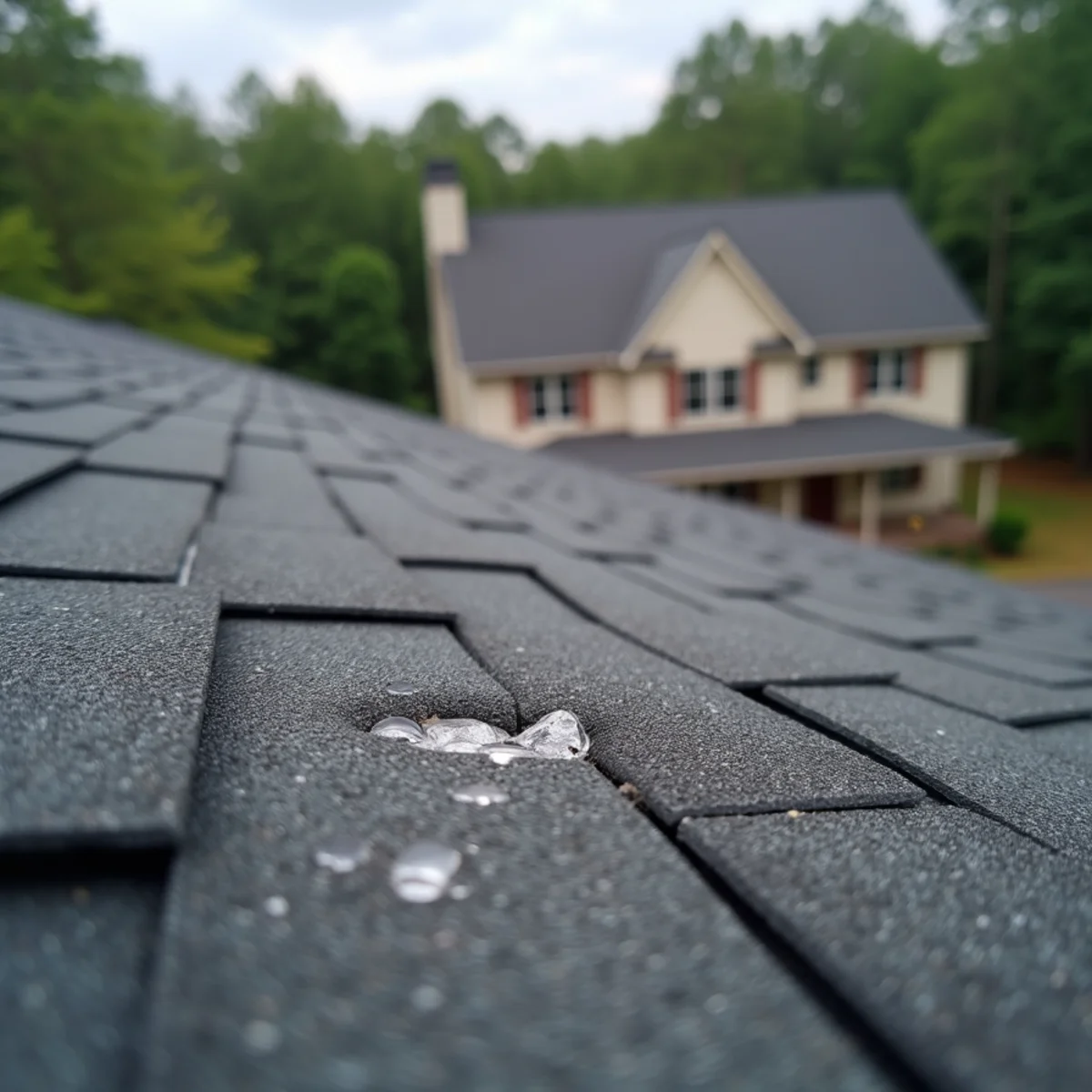
Asphalt shingles are protected by a layer of mineral granules. Those granules are the roof's sunscreen: they shield the asphalt underneath from ultraviolet light and add fire resistance. When a branch rests against or sweeps across your shingles every time the wind blows, it acts like sandpaper. Over months and years, it scrapes those granules loose.
Once a shingle loses its granules, the exposed asphalt starts to dry out, harden, and crack under the Georgia sun. You'll often find the evidence in your gutters or at the bottom of downspouts: piles of gritty, sand-like granules. If you're seeing that, the shingle up top is already thinning where the branch has been rubbing.
Moss and Algae: What Grows in the Shade
Overhanging limbs cast constant shade and hold moisture against the roof surface, and that combination is exactly what moss and algae need. In our humid North Georgia climate, the north- and shade-facing slopes under heavy canopy stay damp long after the rest of the roof has dried.
Moss is more than an eyesore. It grows roots that lift the edges of shingles, and it holds water directly against the roofing like a wet sponge. That trapped moisture works its way under the shingles, soaks the wood decking, and starts the rot. The black streaks many homeowners notice are a blue-green algae that feeds on the limestone filler in shingles, and while the streaks themselves are mostly cosmetic, they're a reliable sign that a slope stays too wet for too long.
Fallen Limbs and Debris: The Direct Hits
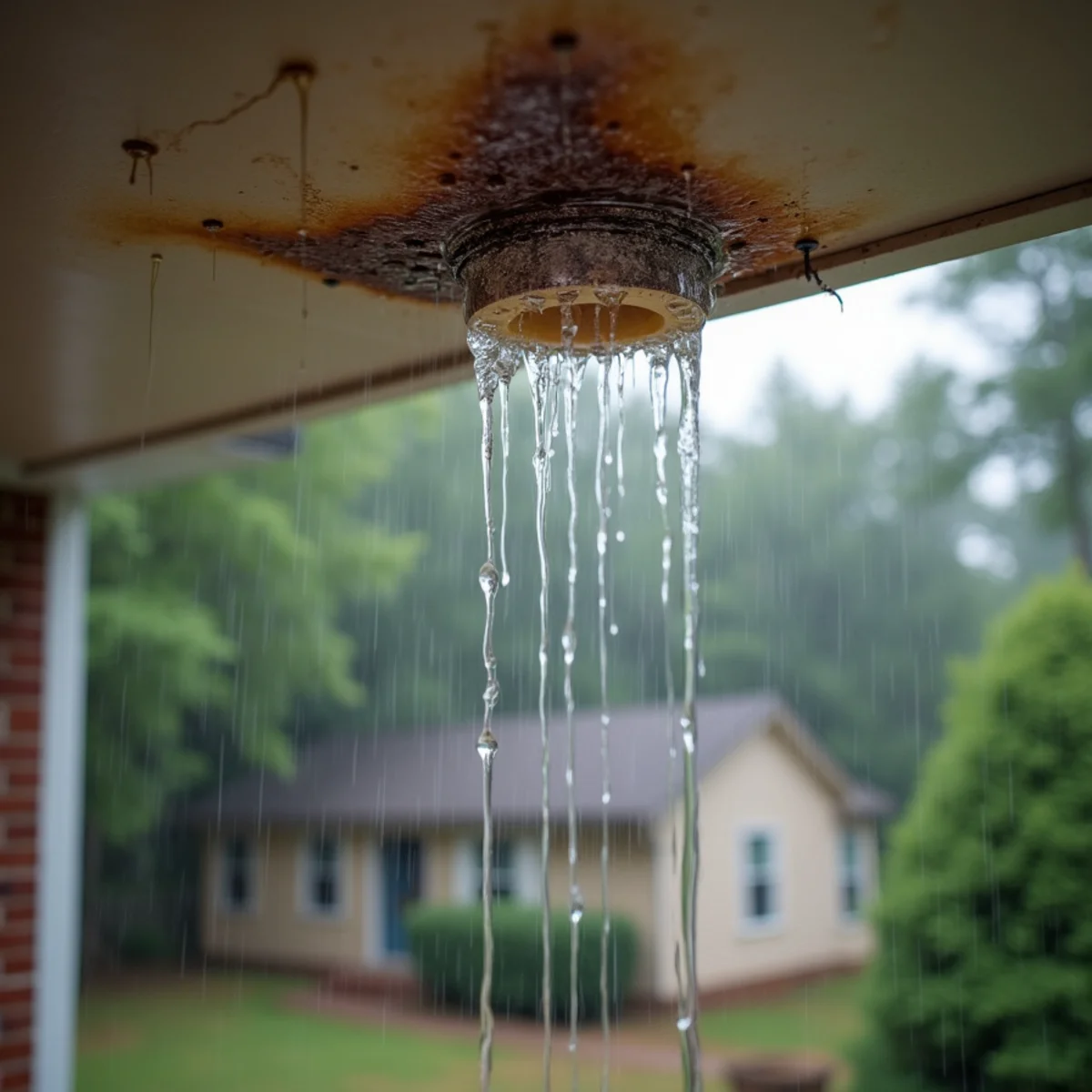
Then there's the obvious danger. North Georgia gets its share of severe storms, straight-line wind, and hail, and a limb that's been sawing against your roof for years is exactly the one that snaps and punctures the decking when the wind finally catches it. Even without a full break, the steady rain of twigs, leaves, and seed pods clogs valleys and gutters, forcing water to back up under the shingles instead of draining away.
The Damage You Don't See From the Ground
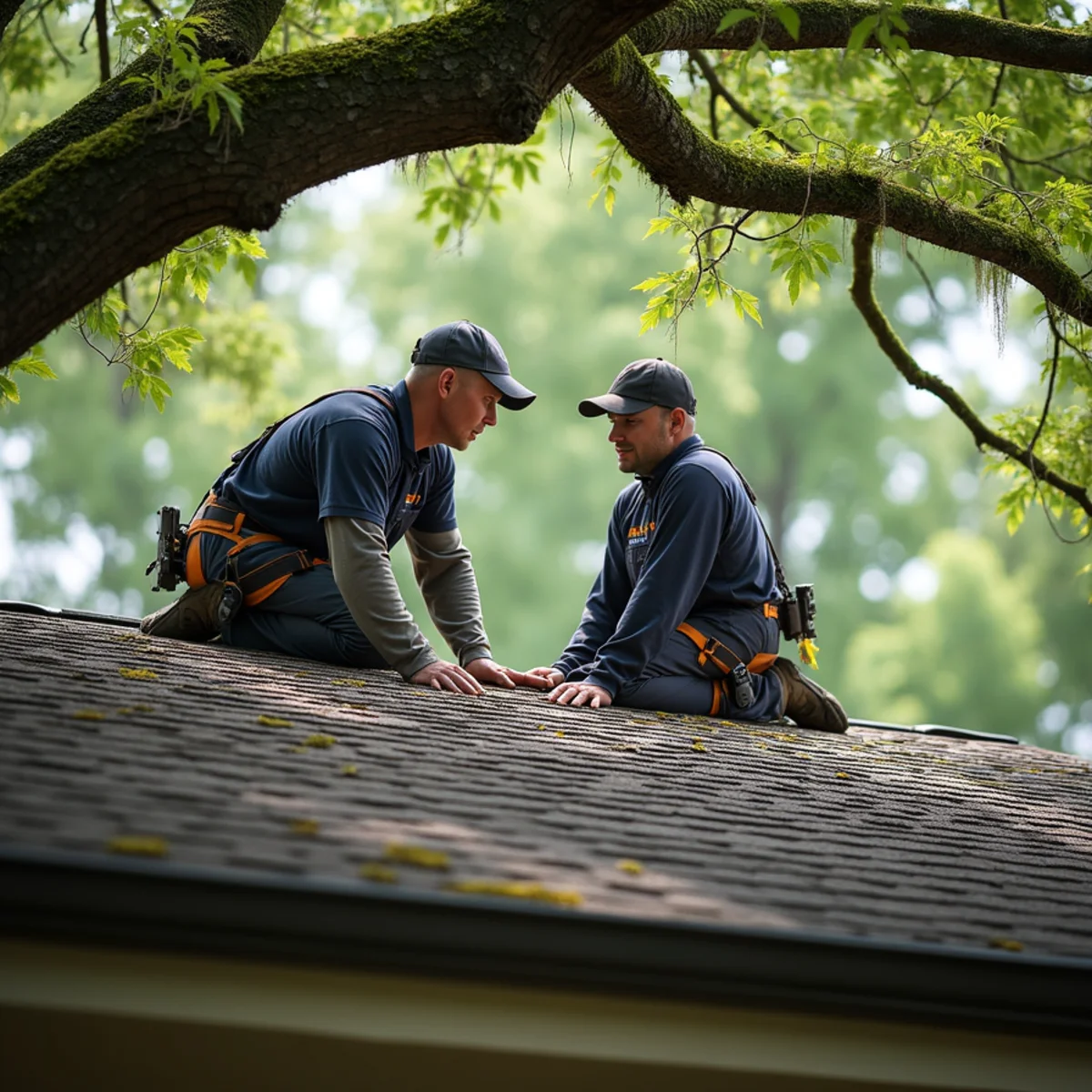
By the time tree-related damage is visible from your driveway, it has usually been developing for a while. The granule loss, the lifted shingle edges, the soft spots in the decking, the early rot at the roof-to-fascia line, these hide under the canopy where you can't see them. That's why a trained eye on the roof matters. Our free 21-point roof inspection is built to catch exactly these slow-moving problems: we check granule coverage, look for moss root intrusion, probe for soft decking, and clear the debris that's holding moisture in place.
What You Can Do to Protect Your Roof
- Trim branches back. Keep limbs at least six to ten feet away from the roof surface. This ends the abrasion and lets sunlight and air dry the slopes.
- Keep gutters and valleys clear. Under heavy canopy, debris builds up fast. Clean drainage keeps water moving off the roof instead of soaking into it.
- Don't power-wash moss off yourself. High-pressure washing strips more granules than the moss ever did. Moss should be treated and gently removed by someone who understands shingle roofing.
- Get shaded slopes inspected regularly. The north and shade-facing sides age fastest under trees and deserve extra attention.
When the damage has already gone too far, granules gone, decking soft, shingles curling, the fix is repair or, in bad cases, replacement. Our team handles targeted roof repair for isolated tree-worn areas, and we specialize in tree damage roof repair when a storm brings a limb down and the roof needs fast, insurance-ready attention. Either way, catching it early is always cheaper than waiting.
A Local Family Business That Knows These Trees
We're based right here in Cartersville, and we've walked roofs under this exact canopy for years. We know which slopes rot first, how our humidity feeds the moss, and what a limb does to decking over a decade of wind. That local knowledge is the difference between a patch that lasts and a patch that fails again next spring.
If there are branches hanging over your roof, or you've noticed granules in the gutters, moss on a shaded slope, or a limb that came down in the last storm, let us take a look before small damage becomes a big bill. Call Eagles Roofing and Reconstruction at (855) 705-1940 to schedule your free 21-point roof inspection. We'll tell you honestly what your roof needs, and what it doesn't.
The 10-Foot Clearance Rule and Why Abrasion Quietly Kills Shingles
The single most useful number we give homeowners is ten feet: keep every branch at least that far from the roof plane. That buffer stops limbs from sweeping the surface in wind, keeps squirrels from using the eave as a highway, and lets the deck dry between rains. On North Georgia's older oaks and pines, a branch that merely touches the shingles during a storm drags across the surface hundreds of times a season, and each pass scuffs off the mineral granules that shield the asphalt from UV. Once those granules thin, the mat underneath bakes, cracks, and curls years ahead of schedule, long before any leak shows up inside.
Granule loss is the damage nobody sees coming because it mimics normal aging. We look for shiny black streaks where the asphalt is exposed, piles of granules in the gutters, and a soft, gritty feel underfoot. A south-slope roof already fights the hottest sun, so abrasion there compounds fast; the cooler, shadier north slope instead grows moss that holds moisture against the shingle edge. The fix depends on the tree: a healthy limb gets a clean directional prune back past the collar, but a leaning or split trunk over the house warrants removal by an arborist. Our free 21-point inspection documents the abrasion so you can decide before it becomes a tear-off. Call (855) 705-1940.
Key Takeaways
- Keep branches at least 10 feet off the roof plane to stop wind abrasion, animal access, and trapped moisture.
- Granule loss from scraping limbs ages shingles prematurely and often looks like ordinary wear until a leak appears.
- South slopes suffer abrasion and UV; shaded north slopes grow moss that wicks water into shingle edges.
- Prune healthy limbs back to the collar, but have an arborist remove leaning or split trunks over the house.
- Clogged gutters from falling debris back water under the eaves, so debris control is part of roof protection.
Frequently Asked Questions
How far should tree branches be from my roof?
Keep limbs at least six to ten feet from the roof surface. That distance stops branches from scraping away granules, lets sunlight dry shaded slopes so moss can't take hold, and reduces the risk of a limb falling on the roof during a North Georgia storm.
Is moss on my roof actually a problem?
Yes. Moss holds moisture against the shingles like a sponge and its roots lift shingle edges, letting water reach the wood decking and start rot. It should be treated and removed gently, never power-washed, since high pressure strips protective granules. Call (855) 705-1940 for an inspection.
How do I know if tree overhang has already damaged my roof?
Watch for granules collecting in gutters and at downspouts, dark streaks or green moss on shaded slopes, and curling or scratched shingles. Much of the damage hides under the canopy, so a professional 21-point inspection is the reliable way to know how far it has gone.
Have a Roofing Question of Your Own?
Eagles Roofing and Reconstruction offers free, no-obligation roof inspections across Cartersville and North Georgia. Get honest answers from a local roofer.