Gutters are the least glamorous part of a roof system, which is exactly why they get ignored until something goes wrong. But your gutters do a critical job: they catch every gallon of water that runs off your roof and carry it safely away from the house. When they leak, sag, or overflow, that water goes somewhere it should not, into your fascia, down your walls, and against your foundation. If you are choosing new gutters or wondering why your old ones keep failing, understanding the difference between seamless and sectional gutters is worth a few minutes.
The Problem With Sectional Gutters
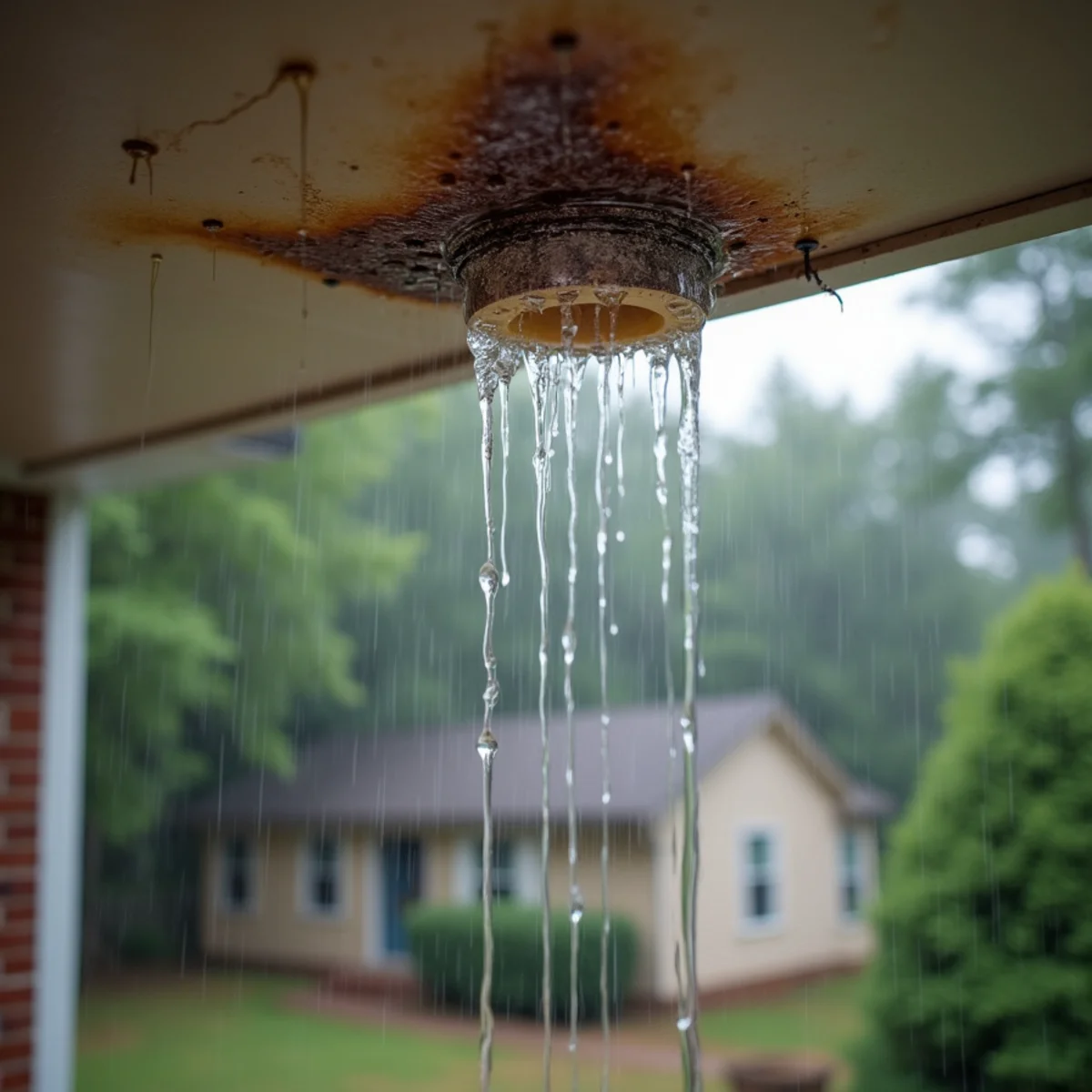
Sectional gutters are the kind you can buy in ten-foot lengths and snap together, and they were the standard for decades. The trouble is right there in the name: sections. Every place two pieces join is a seam, and every seam is a weak point. Sealant is applied at each joint, and under North Georgia's cycle of blazing summer heat and freeze-thaw winters, that sealant expands, contracts, dries out, and eventually cracks. Once a seam starts to weep, water drips behind the gutter onto the fascia board and works its way toward the roof edge. Seams also snag leaves and pine needles, which is a constant issue under our heavy tree canopy, so they clog and overflow faster too.
How Seamless Gutters Are Different
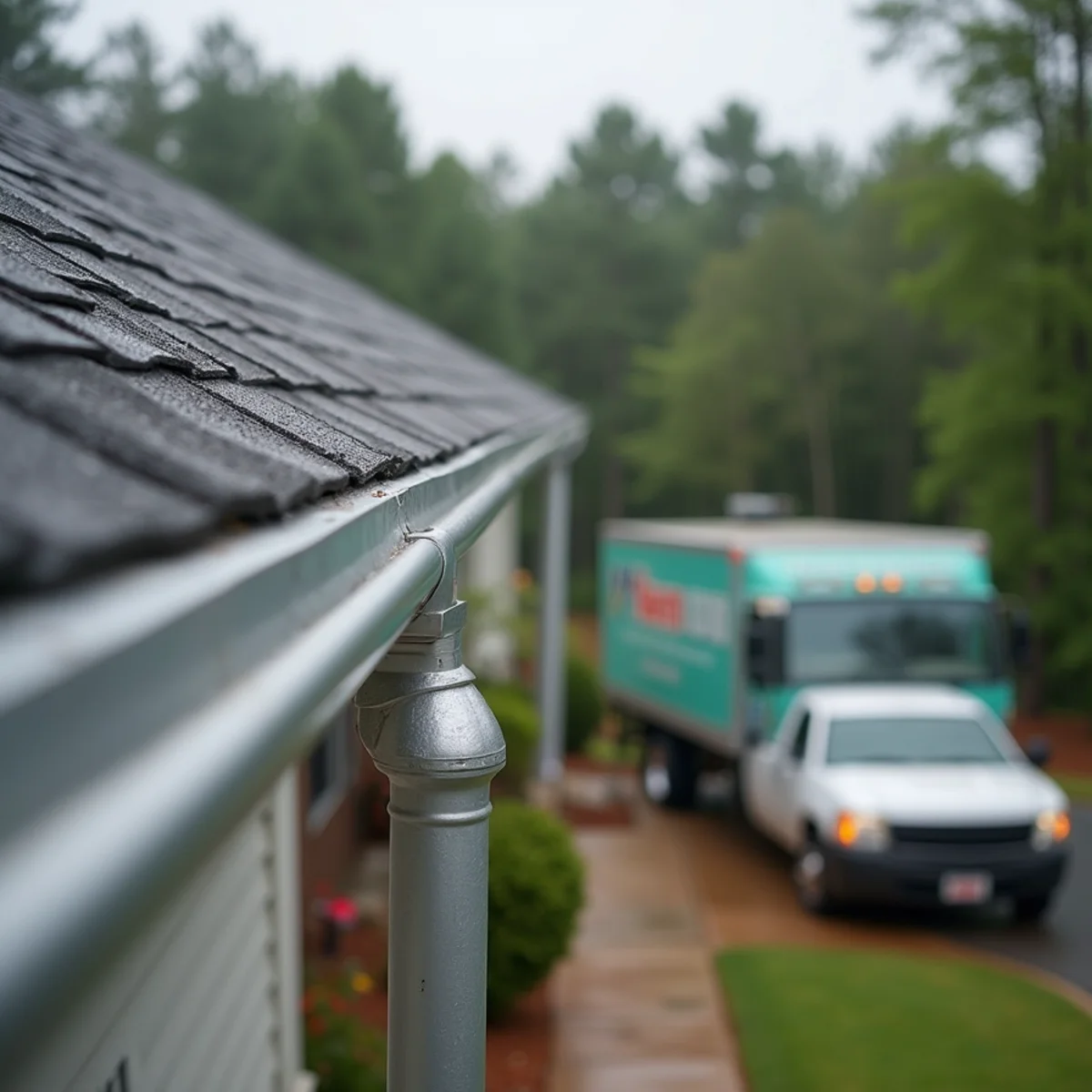
Seamless gutters are formed on-site from a single continuous roll of aluminum, cut to the exact length of each run of your roof. Instead of dozens of joints, the only seams in the entire system are at the corners and downspout outlets. That means:
- Far fewer leak points. No mid-run seams means no rows of sealant waiting to fail.
- Less clogging. A smooth interior gives debris fewer edges to catch on, so water flows freely.
- A cleaner look. One continuous line along the fascia instead of a patchwork of joints.
- A custom fit. Formed to your home's exact measurements, so the pitch to the downspouts is right.
Fewer failure points is the whole point. A gutter that does not leak at the seams is a gutter that actually protects the house.
What Failing Gutters Do to Your Roof and Home
People think of gutters as a foundation issue, and they are, but the damage starts much higher up. Here is the chain of trouble when drainage fails:
The Roof Deck and Fascia
When water backs up or spills behind a gutter, it soaks the fascia board and the edge of the roof decking. That wood stays wet, rots, and invites the same water intrusion that causes interior leaks. Over time you lose the very structure the gutters are fastened to, which is why we so often see rotted fascia and gutters pulling away from the house together.
The Siding and Foundation
Overflowing gutters dump concentrated water right at the base of your walls. That erodes the soil, splashes dirt and moisture onto siding, and pools against the foundation. In our clay-heavy North Georgia soil, water against the foundation leads to settling, cracks, and wet basements and crawl spaces. Downspouts that discharge too close to the house make it worse.
Gutters Are Part of the Roof System
We treat gutters as part of the roof, not an afterthought, because water managed poorly at the edge undoes everything the roof does above it. When we install seamless gutters, we also check the fascia and roof edge for existing damage, because there is no point hanging a perfect new gutter on rotted wood. If we find water has already gotten in, we handle the roof repair first so the whole edge is sound. Cost depends on factors like the total length of runs, the number of stories and corners, downspout count, and whether any fascia needs replacement, so we measure and quote in person.
If your gutters are leaking at the seams, sagging, or overflowing every time it rains, they are not just an eyesore, they are letting water attack your roof deck and foundation right now. Eagles Roofing and Reconstruction is based in Cartersville and serves homeowners across Cartersville and Bartow County and North Georgia. Call (855) 705-1940 for a free evaluation and let us get your drainage working the way it should.
Where the Gutter Meets the Roof Edge — and Why It Leaks
Gutters only protect a roof when they are integrated with it correctly. The drip edge and gutter apron are the handoff: these metal flashings direct runoff off the deck edge and into the gutter trough instead of letting it curl back behind the gutter and soak the fascia. Sectional gutters fail most often at their seams and joints, where tiny leaks drip exactly into that vulnerable seam between gutter and roof edge. Seamless gutters, formed on-site in one continuous run with end joints only at corners and downspouts, remove most of those failure points, which is why they carry water reliably for far longer with less maintenance.
Where the water goes after the downspout matters as much as the gutter itself. Discharge should carry water at least four to six feet away from the house; dumping it at the base lets it pool against the foundation, cause settling and basement seepage, and saturate the soil that supports the structure. Closer to the roof, a clogged or back-pitched gutter starts a chain reaction: standing water rots the fascia board, the rot spreads into the soffit and the roof decking's edge, and soon you are replacing framing, not just a gutter. Good drainage is cheap insurance for expensive structure. Call (855) 705-1940 to have your drainage assessed.
Key Takeaways
- Drip edge and gutter apron must be integrated so runoff enters the trough instead of running behind the gutter.
- Seamless gutters eliminate the seam leaks that plague sectional systems at their joints.
- Downspouts should discharge water at least 4-6 feet from the foundation to prevent settling and seepage.
- A clogged or back-pitched gutter rots fascia, then soffit, then the roof deck edge - a costly chain reaction.
- Proper drainage protects both the roof deck and the foundation, not just the siding.
Frequently Asked Questions
Are seamless gutters really worth more than sectional?
For most North Georgia homes, yes. Seamless gutters eliminate the mid-run seams where sectional systems leak and clog, so they need far less maintenance and protect your fascia and foundation more reliably over their lifespan.
Can seamless gutters still leak?
The only joints are at corners and downspout outlets, so leaks are rare and far fewer than with sectional gutters. Proper installation with the right pitch and secure fasteners keeps even those points watertight.
How do I know if bad gutters have already damaged my roof?
Signs include rotted or soft fascia, gutters pulling away from the house, peeling paint behind the gutter, and staining at the roof edge. We check all of this during a free evaluation and address any water damage before installing new gutters.
Have a Roofing Question of Your Own?
Eagles Roofing and Reconstruction offers free, no-obligation roof inspections across Cartersville and North Georgia. Get honest answers from a local roofer.