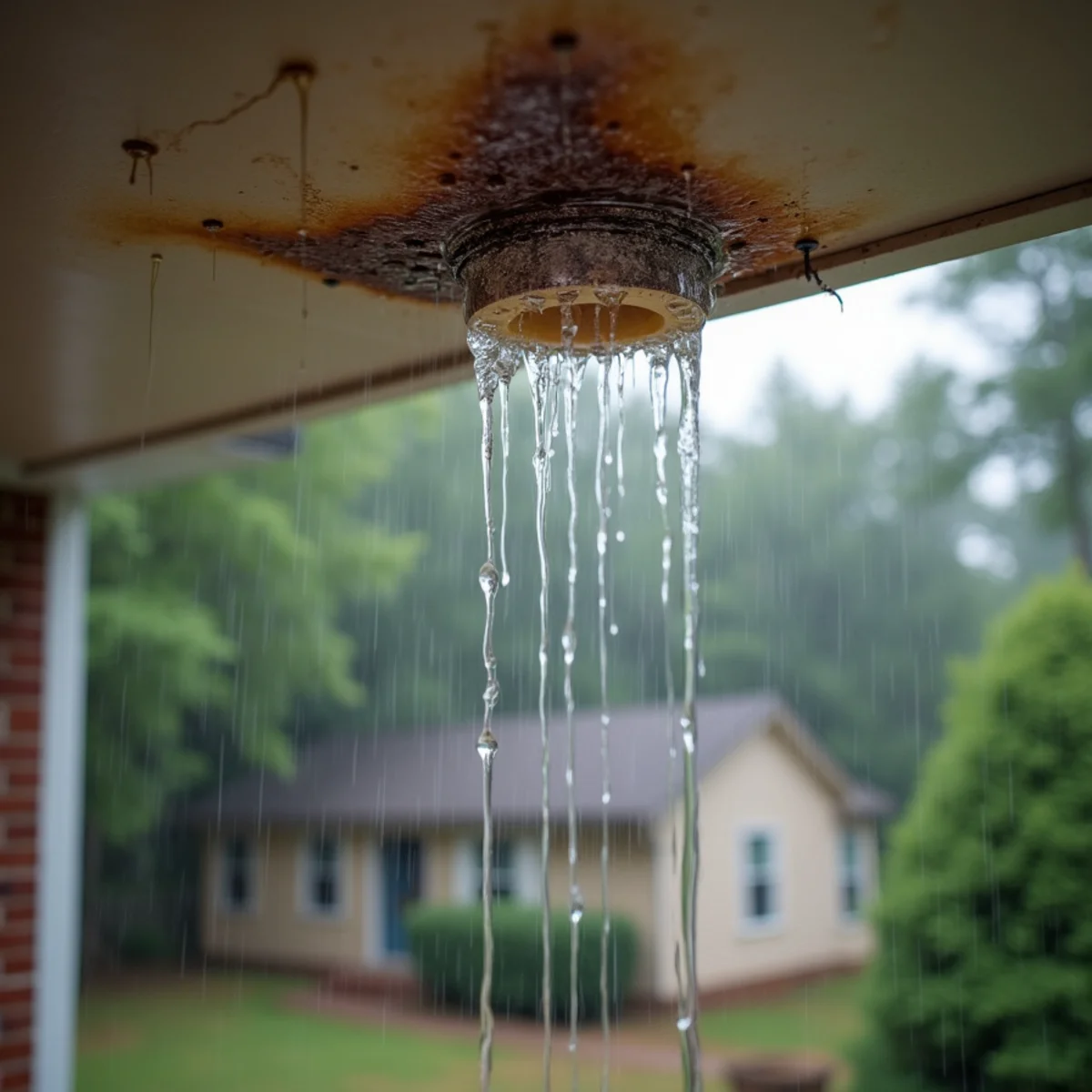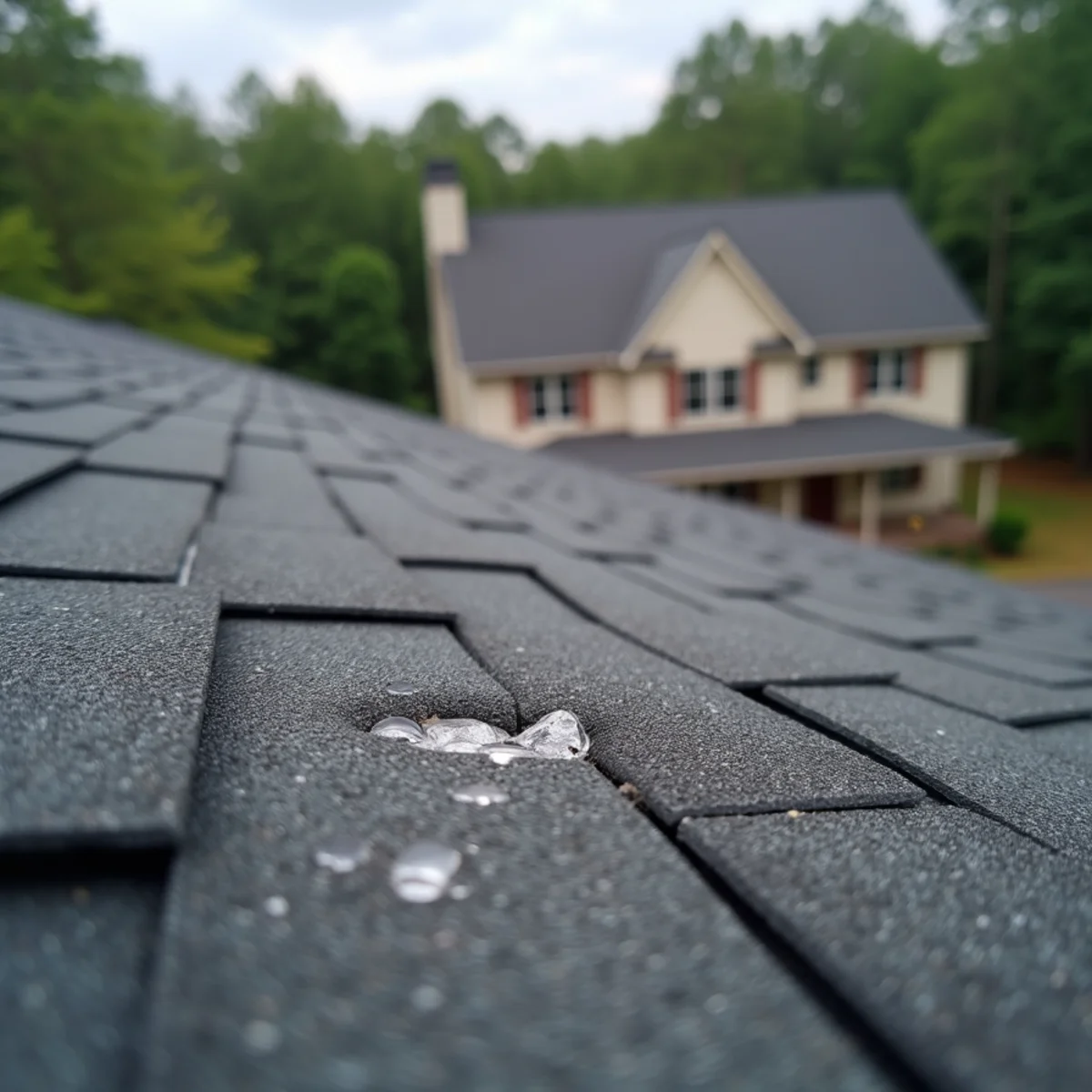
You see the water stain spreading across the ceiling, but the shingles overhead look fine. You climb into the attic after the next rain and the drip seems to come from nowhere. This is one of the most common calls we get, and nine times out of ten the answer is the same: it is not the shingles that failed, it is the flashing. Flashing is the thin metal that seals the joints where your roof meets something else, and around here in North Georgia, chimney and valley flashing quietly cause more interior water damage than any storm.
What Flashing Actually Does
Shingles shed water off flat, open planes of the roof. But a roof is not one continuous plane. It has penetrations, transitions, and walls interrupting it, and every one of those joints is a potential entry point. Flashing bridges those gaps. When it is installed correctly and kept in good shape, water rolls right over it. When it corrodes, lifts, or was rushed during the original build, water finds the path of least resistance and travels along the decking before it ever shows up on your ceiling, sometimes several feet away from the real leak.
Chimney Flashing
A masonry chimney is a huge interruption in the roof plane, and it needs a layered system to stay watertight. Step flashing tucks under each course of shingles along the sides, counter-flashing is set into the mortar joints of the brick, and the base and cricket (a small peaked structure behind the chimney) divert water around it. The failure points are predictable. Old caulk-only "flashing" that a previous crew smeared on instead of doing it right. Mortar joints that have eroded and let the counter-flashing pull loose. Rust holes in galvanized metal that has seen twenty North Georgia summers of heat and humidity followed by freeze-thaw winters.
Valley Flashing
A valley is where two roof planes meet and funnel water down a single channel, and it carries more water than any other part of the roof. Under heavy tree canopy, common on properties near the Etowah River and around Lake Allatoona, valleys also collect pine needles, leaves, and grit that hold moisture against the metal. Over time that abrasion and debris wear through the flashing or clog the channel so water backs up under the shingles on either side. A valley that fails rarely announces itself. It just seeps.
How to Tell Flashing Is the Problem
Because leaks travel, you have to think like water. Here are the signs that point to flashing rather than the field of the roof:
- Stains that appear near a chimney, skylight, dormer, or wall, especially on the ceiling closest to those features.
- Leaks that only show up in wind-driven rain, when water is pushed sideways into a joint that sheds fine in a straight downpour.
- Rust streaks running down the roof below a chimney or in a valley.
- Visible lifted, bent, or missing metal, or a chimney sealed with nothing but a bead of cracked black caulk.
- Daylight or damp decking visible in the attic near a penetration after rain.
A trained eye confirms it quickly. Our free 21-point roof inspection checks every flashing joint on the roof, and we photograph what we find so you can see the problem for yourself instead of taking our word for it.
Why Caulk Is Not a Repair
Sealant has its place as a supporting detail, but it is not a substitute for properly formed metal. Caulk expands and contracts at a different rate than the roof, it dries out under our summer heat, and within a few seasons it cracks and pulls away. If someone "fixed" your leak with a tube of sealant last year and it is back, that is not bad luck, that is the wrong fix. Correct chimney flashing and skylight sealing means removing the old metal, cutting fresh reglets into the mortar where needed, installing new step and counter-flashing, and weaving it into the shingle courses so water is physically directed away from the joint.
Catching It Before the Drywall Goes
The cruel part of a flashing leak is the timeline. By the time you see the stain, water has usually been getting in for weeks or months, rotting decking and soaking insulation the whole time. The repair to the metal itself is often modest. The damage it causes when ignored, wet framing, mold, ruined ceilings, is what gets expensive. Cost depends on factors like the chimney size, whether decking underneath needs replacement, roof pitch, and access, which is exactly why we quote after we look rather than over the phone.
If you have a stain you cannot explain or a leak that keeps coming back after someone else "sealed" it, do not wait for it to spread. Related work like general roof repair often uncovers the same flashing issues on nearby joints, so it is worth a full look. Eagles Roofing and Reconstruction is based right here in Cartersville and serves homeowners across Cartersville and Bartow County. Call us at (855) 705-1940 to schedule your free inspection, and let us find where the water is really getting in.
Crickets, Kick-Out Flashing, and Where Leaks Really Start
Water almost never drips straight down from where it enters. At a chimney, water slips under failed step or counter-flashing, runs along the underside of the decking or a rafter, and finally shows up as a stain ten or fifteen feet away on a ceiling or interior wall. That travel is exactly why homeowners chase the wrong spot for months. Valleys compound the problem because they concentrate runoff from two roof planes into one channel; any gap in the valley metal or a short shingle cut lets that high-volume flow find the deck. When we run our free 21-point inspection, we trace stains back upslope to the real entry point instead of patching the symptom.
Wide chimneys need a cricket, or saddle, on the uphill side. Without that little peaked diverter, debris and water pile against the flat back of the masonry, sit there, and eventually wick through. Equally overlooked is kick-out flashing where a roof plane dead-ends into a sidewall. Miss that single diverter piece and water sheets straight down behind the siding, rotting sheathing and framing invisibly for years. Proper flashing is layered metal woven into the shingle courses, not a bead of caulk, and it is the detail that separates a dry roof from a recurring mystery leak. Call (855) 705-1940 if a stain keeps coming back.
Key Takeaways
- Leaks often appear far from their source because water travels along decking and rafters before it drips.
- Valleys channel runoff from two roof planes, so even a small gap in valley metal causes major intrusion.
- Chimneys wider than about 30 inches need a cricket/saddle to divert water around the masonry.
- Kick-out flashing at roof-to-wall intersections prevents water from pouring behind siding and rotting framing.
- Real flashing is layered metal woven into the shingles, not sealant, so caulk-only repairs keep failing.
Frequently Asked Questions
Why does my roof leak only during heavy or windy rain?
Wind-driven rain pushes water sideways into flashing joints around chimneys, valleys, and walls that shed fine in a straight downpour. A leak that shows up only in storms almost always points to a flashing failure rather than the open field of the roof.
Can you just re-caulk the chimney instead of replacing the flashing?
Caulk alone is a temporary patch, not a repair. It dries and cracks within a few seasons under North Georgia heat. A lasting fix means new step and counter-flashing properly set into the shingles and mortar, which is what we install.
How much does chimney flashing repair cost?
It depends on factors like chimney size, roof pitch, access, and whether the decking underneath has water damage. We assess it during a free inspection and give you a written quote with photos, rather than guessing over the phone.
Have a Roofing Question of Your Own?
Eagles Roofing and Reconstruction offers free, no-obligation roof inspections across Cartersville and North Georgia. Get honest answers from a local roofer.