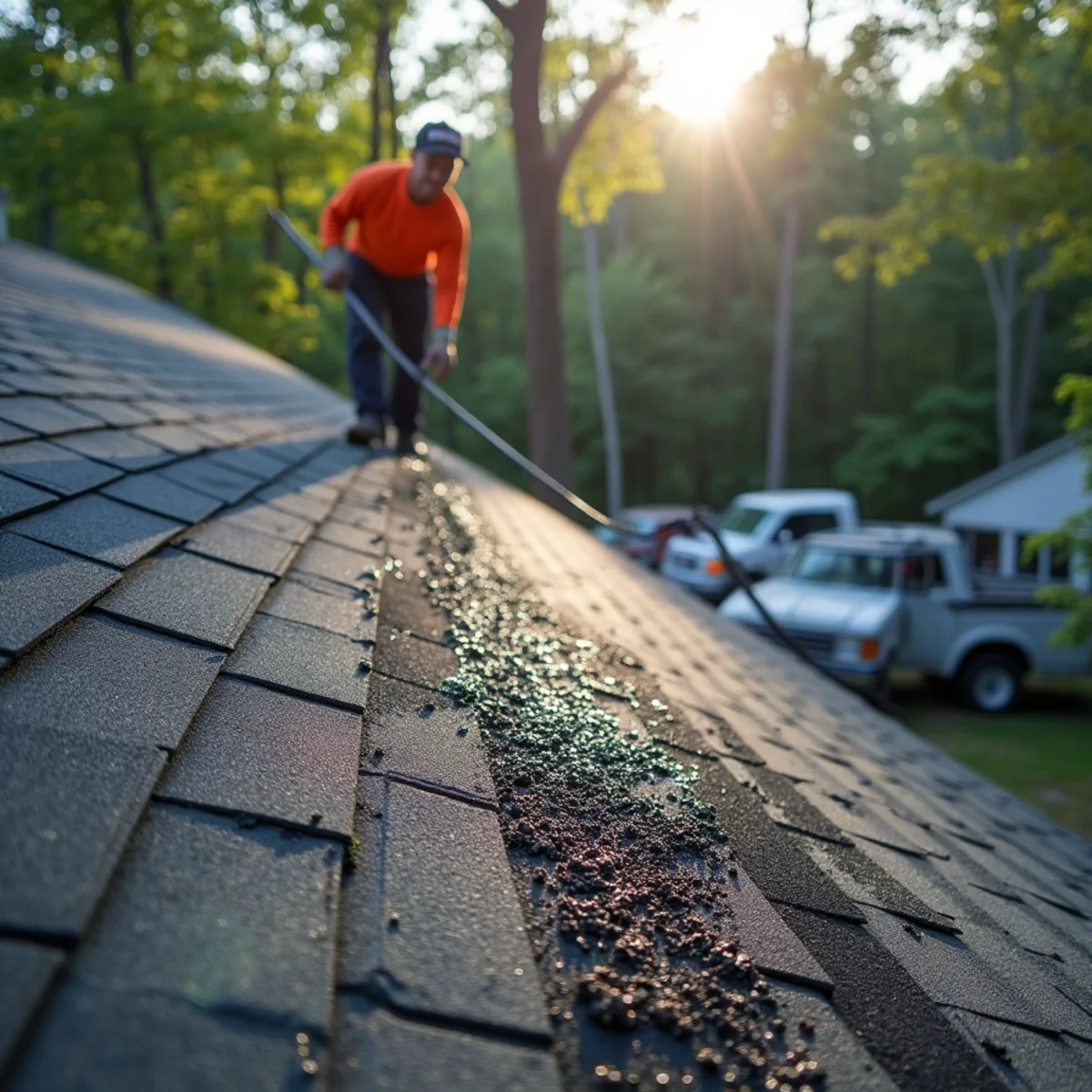
You have seen them on roofs all over the neighborhood: dark streaks running down the shingles like the roof is dirty or worn out. Homeowners often assume it is age, or that the shingles are somehow rotting. The truth is those streaks are alive. They are colonies of a blue-green algae called Gloeocapsa magma, and in the warm, humid, tree-shaded climate of North Georgia they thrive. The good news is that streaked shingles are usually not failing shingles. The bad news is that cleaning them the wrong way can do real damage, so it is worth knowing how to do it right.
What the Black Streaks Actually Are
Gloeocapsa magma is an airborne algae that lands on your roof and feeds on the limestone filler used in asphalt shingles. It loves moisture and shade, which is exactly what our humid summers and heavy tree canopy near the Etowah River and Lake Allatoona provide. That is why you almost always see the streaks worst on the north-facing slopes that stay damp and shaded longest, and why they run in vertical streaks, the algae washes downward with the rain. The dark color comes from a protective sheath the algae develops against sunlight.
Beyond looking bad, the algae holds moisture against the shingle surface and, over years, can contribute to granule loss and slightly higher roof temperatures. It is not an emergency, but it is not purely cosmetic either, which is why cleaning it off makes sense.
The Cardinal Rule: Never Pressure Wash Shingles
This is the single most important thing to know. Do not pressure wash an asphalt shingle roof. High-pressure water blasts off the protective granules that give shingles their color, UV resistance, and lifespan. A pressure washer will strip years off your roof in an afternoon and can void your shingle manufacturer's warranty outright. It may look clean for a season, but you have traded streaks for a genuinely damaged roof. Scrubbing aggressively with stiff brushes causes the same granule loss.
The Safe Way to Clean Shingles
The industry-accepted method is a low-pressure, chemical-based soft wash. The approach the asphalt roofing industry recommends uses a diluted cleaning solution, applied gently, that kills the algae so it can rinse away and weather off. Done correctly it looks like this:
- A gentle, roof-safe cleaning solution is applied at low pressure to kill the algae and loosen the staining.
- It is left to dwell, then rinsed with low pressure, never a power washer.
- Surrounding plants, gutters, and landscaping are wetted down and protected, since the solution can harm vegetation.
- Care is taken with runoff and with anyone working on the roof, because a wet roof treated with cleaner is extremely slippery.
That last point matters. Roof cleaning combines the fall risk of being up high with a wet, slick surface and chemicals. This is one of those jobs where the DIY savings are not worth the risk for most homeowners, and it is easy to damage shingles or landscaping if you get the mix or pressure wrong.
Prevention: Stopping the Streaks From Coming Back
Cleaning removes the algae, but in our climate it will come back unless you change the conditions or the roof. A few things help:
- Trim back overhanging branches so the roof gets more sun and dries faster, denying the algae the shade and moisture it needs.
- Keep gutters and valleys clear so water is not lingering on the roof.
- Consider algae-resistant shingles when it is time to re-roof. Modern asphalt shingles are available with copper or zinc granules built in that inhibit algae growth for years. If your roof is streaked and also aging, replacing it with algae-resistant shingles solves both problems at once.
When Streaks Signal Something More
Sometimes what looks like algae is masking real wear underneath: heavy granule loss, curling, or shingles near the end of their life. It is worth having a professional confirm whether you have a cleaning situation or a replacement situation before you spend money on either. Our free 21-point roof inspection tells you exactly where your roof stands, and if the inspection turns up damage, we can handle the roof repair too. Cost for cleaning or any follow-up depends on factors like roof size, pitch, the severity of the growth, and access, so we assess it in person rather than over the phone.
If black streaks are aging the look of your home, resist the urge to grab a pressure washer, and do not let anyone else point one at your roof either. Eagles Roofing and Reconstruction is a local family business in Cartersville, serving homeowners across Cartersville and Bartow County and North Georgia. Call (855) 705-1940 to schedule your free inspection and get honest advice on whether your roof needs a cleaning or something more.
Why Soft-Washing Beats Pressure-Washing for Roof Algae
Those black streaks are a cyanobacteria called Gloeocapsa magma that feeds on the limestone filler in asphalt shingles and thrives in humid Southern climates. The instinct to blast it off with a pressure washer destroys the roof. High pressure tears away the granule layer, forces water beneath the shingles, and loosens seal strips, trading a cosmetic problem for real structural damage and often a voided warranty. The correct method is a soft wash: applying a low-pressure cleaning solution, typically a diluted sodium hypochlorite mix, that kills the organism at the root, then rinsing gently. Following guidance aligned with standards like ASTM D3161 for wind resistance means treating the roof without disturbing the shingles' integrity.
Prevention beats repeated cleaning. Strips of zinc or copper installed near the ridge release trace metal ions every time it rains; that runoff washes down the slope and suppresses algae growth before streaks can take hold. On an aging roof that is streaking badly, the long-term answer is algae-resistant shingles, which embed copper granules across the surface and carry manufacturer algae warranties of ten years or more. If your streaks keep returning after cleaning, that is the roof telling you it is time to plan a replacement with AR shingles rather than cleaning the same stains every couple of years. Call (855) 705-1940 for a safe soft-wash assessment or replacement quote.
Key Takeaways
- The black streaks are Gloeocapsa magma, a cyanobacteria that eats the limestone filler in asphalt shingles.
- Pressure washing destroys shingles by stripping granules and forcing water underneath - it often voids the warranty.
- A soft wash with a diluted cleaning solution kills the algae at the root without harming the roof.
- Zinc or copper strips near the ridge release metal ions in rain that suppress future algae growth.
- Algae-resistant shingles with copper granules prevent streaks and carry multi-year algae warranties.
Frequently Asked Questions
Will the black streaks damage my roof if I leave them?
Algae is not an emergency, but over years it holds moisture against the shingles and can contribute to granule loss and higher roof temperatures. It is worth cleaning, and worth confirming the streaks are not hiding real wear underneath.
Can I just pressure wash the streaks off myself?
No. Pressure washing blasts off the protective granules that give shingles their lifespan and can void your warranty. The safe method is a low-pressure soft wash with a roof-safe cleaning solution, which is what the roofing industry recommends.
How do I keep the algae from coming back?
Trim overhanging branches so the roof dries faster, keep gutters and valleys clear, and consider algae-resistant shingles when it is time to re-roof. Those shingles use copper or zinc granules that inhibit growth for years.
Have a Roofing Question of Your Own?
Eagles Roofing and Reconstruction offers free, no-obligation roof inspections across Cartersville and North Georgia. Get honest answers from a local roofer.